
In the dusty heat of late August 2024, a select group of players strapped themselves into the cockpit of the Trailblazer, eager to carve a smuggler’s path through the Outer Rim three full days ahead of the galactic crowd. They had paid a premium for this privilege, an act of faith in Ubisoft and its promise of a living, open-world Star Wars fantasy. But instead of a head start on glory, many were met with the digital equivalent of a collapsing hyperspace route: a progress-blocking bug that forced the publisher to ask them to delete their save files and start over. The fallout from that moment, like the ripple of a distant supernova, is still influencing community trust in 2026.
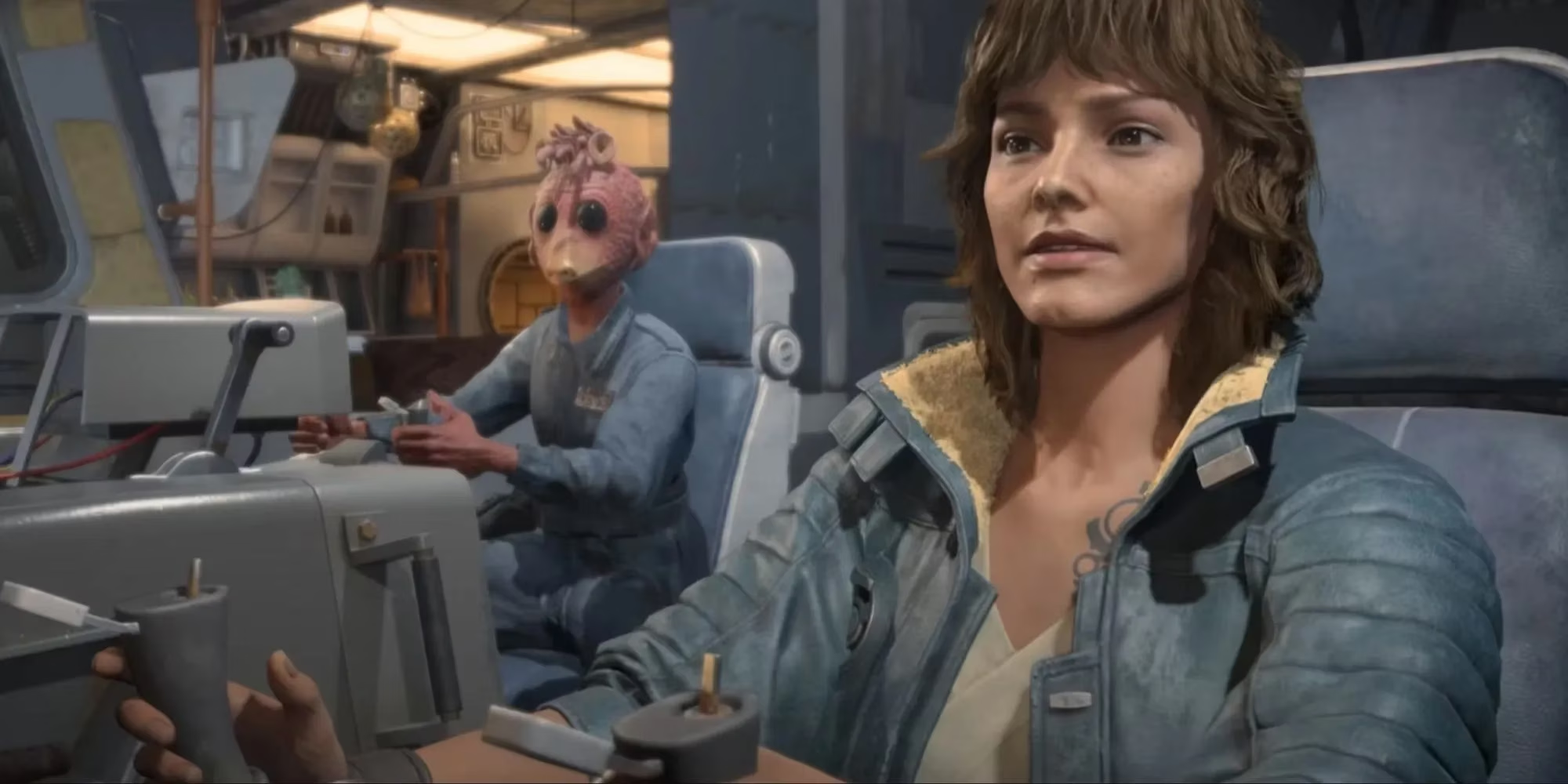
When the first reports emerged, they came in fragments, shared in hushed tones on Reddit before erupting into a cacophony of frustration. Ubisoft had identified the corruption early and pushed an emergency patch, but the remedy was salt in the wound. PlayStation 5 users who had sunk hours into scouting gang territories, perfecting their speeder handling, and bonding with the mercurial Nix were told their progress was forfeit. The game couldn’t guarantee those saves would ever function correctly, so the official word came: begin a new life as Kay Vess. For fans who had arranged their weekends around this early look, it was like building an elaborate sandcastle of Sullustan crystals, only to watch the tide erase it in a single indifferent breath.
The apology from Ubisoft, shared in an email by user BubbaJonesTheThird, was contrite in tone but left many feeling they had been handed a ration bar after being promised a feast. “We fully acknowledge that asking you to start a new game is not the best experience, especially during the Early Access period, and for that we apologize,” the message read. As a gesture of reconciliation, the publisher bestowed upon every affected player a Trailblazer trinket—a cosmetic bauble for Kay’s ship—and 100 Ubisoft Connect Units. These points, ostensibly useful for in-game items or a 20% discount on the Ubisoft Store, felt less like compensation and more like throwing a single glow rod into a black hole and expecting it to light the way. The trinket, while fitting for a scoundrel’s aesthetic, could not carry the weight of dozens of lost hours, each one a locked-off cantina conversation or a syndicate favor now dissolved into the ether.
The community’s reaction was swift and merciless. On platforms like Reddit, the word “laughable” became a refrain, a shorthand for the chasm between the harm done and the remedy offered. Many players had invested not just time but an emotional thrust into a narrative that promised choice and consequence; being asked to replay the opening hours was akin to a musician being told to recompose a symphony from memory after the original score blew out of a landspeeder window. One commentator, Sevansup, drew a sharp line connecting this incident to a pattern of neglect. Prince of Persia: The Lost Crown had suffered a similar fate when Ubisoft Connect devoured hours of progress for early Steam buyers. The publisher’s solution then was not compensation but the surgical removal of cloud autosaves—a fix that felt, to many, like amputating a limb because of a splinter.
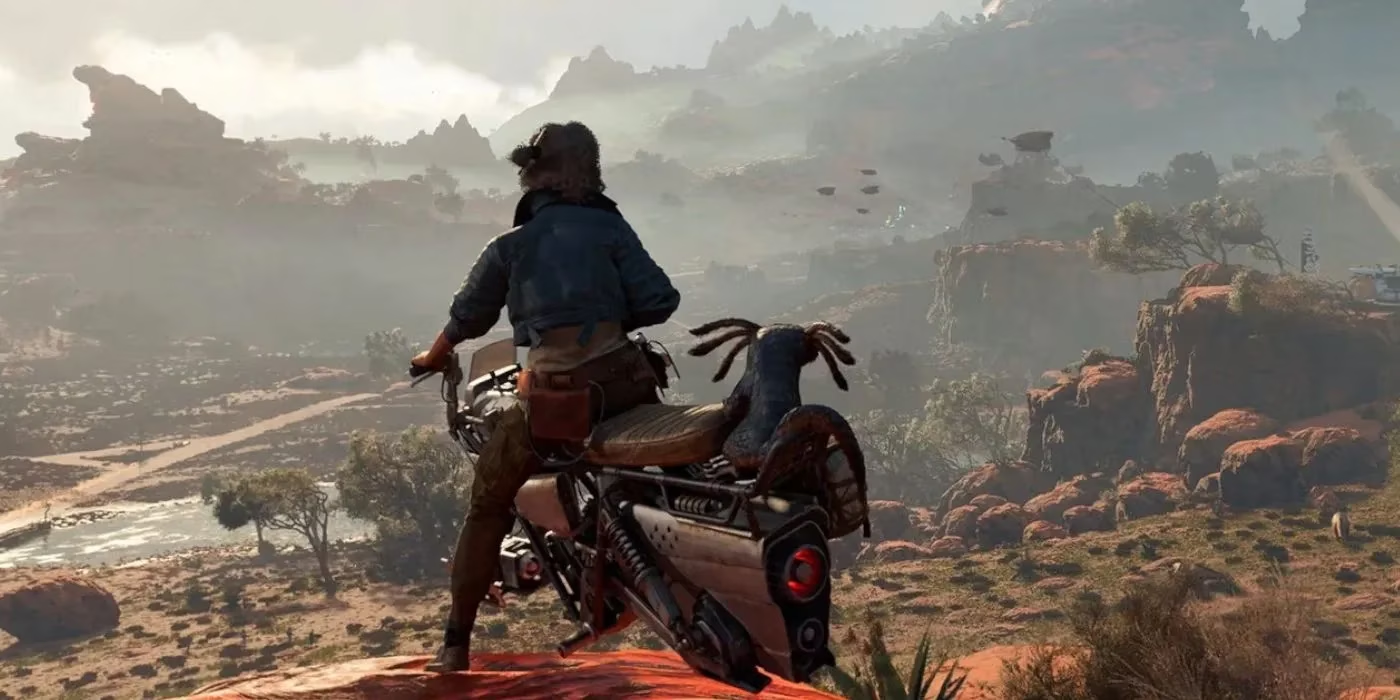
That Lost Crown steam page update, thanking players for reports while offering zero restoration, became a ghost haunting the Outlaws controversy. The same phantom appeared in Assassin’s Creed IV: Black Flag, where progress loss was met with an identical shutdown of automatic saves rather than a meaningful olive branch. To the loyalists who buy expensive editions to play early, this pattern feels like a betrayal of the implicit contract: you pay for access, we guarantee a stable product. In 2026, the scars are still visible in community forums, where veterans of the Outlaws launch recount their tales with the weariness of old spacers gathered around a dying campfire on Jakku.
What stings most is the sense that these early adopters are the very lifeblood of a franchise’s launch momentum. They generate word of mouth, populate streams, and often defend a game in its infancy. Ubisoft’s store discount, hovering at 20%, was viewed not as a gift but as a cynical lure designed to coax them into another purchase. The trinket, meanwhile, became a meme—a golden token for a wound that required bacta. The broader industry has seen pre-release issues multiply, like a mynock infestation spreading through a ship’s wiring, causing more and more players to adopt a wait-and-see posture. Yet the Star Wars Outlaws episode remains a textbook example of how not to handle a premium early access window.
By 2026, the game itself has evolved. Patches have smoothed the rough edges, and new content has shifted the conversation. But for those who stood at the front of the line in 2024, the memory of that forced restart and the trivial compensation endures. It is a cautionary tale, passed from one generation of gamers to the next, about the gamble of early adoption and the gap between corporate apology and genuine remorse. The trinket still sits in dozens of inventories, a silent reminder that trust, once broken, takes more than 100 points to repair.
Ubisoft, for its part, has faced mounting pressure across multiple titles. The Assassin’s Creed Shadows petition controversy that simmered alongside Outlaws further illustrated a publisher wrestling with its community’s patience. If the Outlaws fiasco taught the industry anything, it is that the most loyal fans, those who buy the priciest editions at the earliest possible moment, expect their passion to be met with more than a trinket and a discount code. They want their time to be acknowledged as something irreplaceable, a currency far more valuable than Ubisoft Connect Units. As 2026 unfolds, the question remains whether the lesson has truly been learned, or if the next high-profile early access will once again see adventurers asked to sacrifice their progress on the altar of a hasty launch.