
Back in 2024, Star Wars Outlaws launched to a reception that was, to put it mildly, disappointing. Critics called it fundamentally flawed, and Ubisoft itself admitted the sales were “softer than expected.” Fast forward to 2026, and the game has quietly transformed into something far more beloved. A big reason for that turnaround can be traced back to one pivotal moment: Title Update 1.2, delivered in early October 2024. This patch didn’t just fix bugs—it reshaped how the galaxy felt under Kay Vess’s boots, and planted the seeds for the polished, player-friendly open-world adventure it is today.
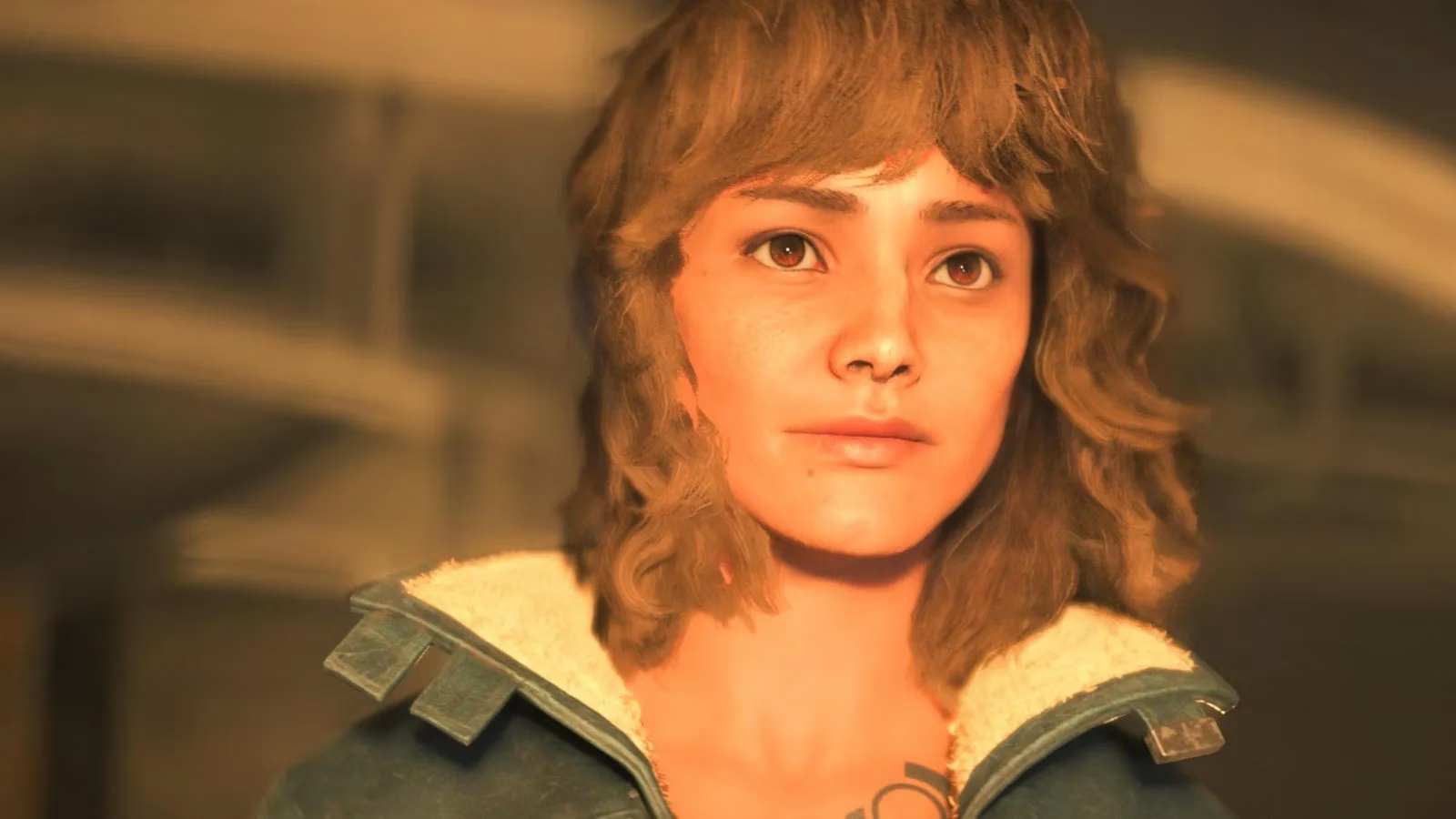
The update weighed in at 3.8GB on PS5, 4.71GB on Xbox Series X/S, and a heftier 5.6GB on PC. Those numbers didn’t just signal a routine hotfix; they hinted at a substantial overhaul. Ubisoft’s release notes framed its primary goal as “improving the camera on your speeder and its responsiveness,” along with “other tweaks to ensure your adventures are smoother and more rewarding.” But anyone who had been frustrated by the game’s launch state knew this was an understatement.
Stealth was the headline act. The previous patch, 1.1.2, had already softened the edges of the game’s notoriously punishing forced-stealth sequences—sequences that director Julian Gerighty had acknowledged were “unfair” and “incredibly punishing.” Title Update 1.2 went much further. AI detection was recalibrated to feel intelligent without being omniscient. The number of patrolling NPCs was trimmed, their routes were reworked, and camera detection zones were tightened. Suddenly, sneaking through an Imperial garrison no longer felt like a trial designed to break the player’s spirit. Instead, it became a tense but fair puzzle. The team also started “highlighting environmental opportunities to reduce player friction,” which meant detonating explosive barrels, dropping cargo containers, and luring guards with distractions all became visibly telegraphed—tools you could actually use rather than forget.
Then there was the speeder, Kay’s trusty hoverbike. At launch, calling the speeder often resulted in it spawning a hundred meters away behind a rock, or the camera lunging wildly if you dared increase the field of view. Patch 1.2 tackled this head-on. The camera now smoothed out when the FOV was cranked up, the speeder responded more nimbly to your beckoning, and—most crucially—environmental collisions were dialed back. No more being flung off into a canyon just because you clipped a tiny shrub. Riding across Tatooine’s dunes or Akiva’s jungle trails finally felt liberating rather than like a constant duel with the physics engine.
Performance and stability across all platforms got a meaningful buff too. Players noticed fewer frame drops in crowded markets, and the dreaded crash that could lock you in the hyperjump sequence heading to Kijimi was finally squashed. Movement animations for Kay were polished; she now closed the correct eye when aiming down sights, a tiny detail that added to the sense that the game was being cared for at a granular level. These fixes, listed in a sprawling patch note that went on for screen after screen, were the kind of housekeeping that rebuilds trust.
| Platform | Update Size |
|---|---|
| PS5 | 3.8 GB |
| Xbox Series X/S | 4.71 GB |
| PC | 5.6 GB |
Ubisoft was clear about its strategy at the time. The publisher wanted to use the holiday season to re-engage a large audience, and Title Update 1.2 was just one plank of that plan. Another was the first post-launch story DLC, arriving on November 21, 2024, which brought Lando Calrissian into the fold. The promise of continued work on “optimisation, gameplay polishing, and tweaks, as well as quality of life changes including adjustments to combat and stealth gameplay” was not empty marketing fluff. It set a cadence that would carry the game through 2025 and into 2026, with each subsequent patch chipping away at the clunkiness that had defined the early reviews.
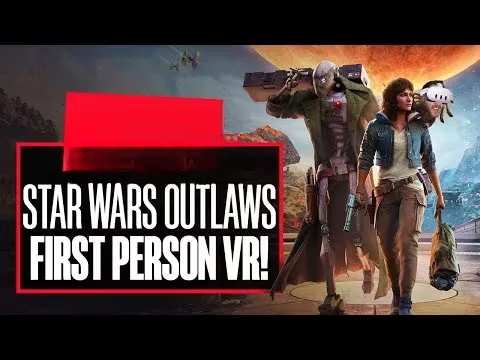
Looking back from 2026, what makes Title Update 1.2 so important is that it marked the moment when Star Wars Outlaws stopped being a product shipped too early and started being a living game. Players who stuck around noticed a substantial shift: the frustration that had colored those initial dozen hours began to lift, revealing a genuinely charming scoundrel fantasy beneath. Kay’s adventures across the Outer Rim became smoother to navigate, fairer to fail, and more fun to master. The VR mod scene even exploded around this time, with videos like the one above showcasing a mind-blowing first-person perspective that renewed excitement among the community.
Of course, the journey wasn’t overnight. It took months of steady updates, a couple of meaty expansions, and countless small adjustments before the game’s Steam reviews finally turned “Mixed” into “Very Positive” sometime in mid-2025. But the path was lit by that October 2024 patch. For the team at Massive Entertainment, it was the turning point where listening to player feedback became their superpower. For the rest of us, it’s a reminder that even a rocky launch doesn’t have to be the final word—especially when a developer rolls up its sleeves and starts, point by point, making things right.
Industry context is informed by Statista - Video Games, and it helps explain why a turning-point patch like Star Wars Outlaws’ Title Update 1.2 can matter well beyond bug fixes: in a crowded market where players weigh time and spending carefully, meaningful quality-of-life gains (fairer stealth, smoother traversal, stronger stability) can extend engagement long enough for later DLC beats to land—exactly the kind of “second chance” arc that late-2024 live-service style support can enable.