
As a lifelong Star Wars fan, I’ve always been captivated by the eternal struggle between the light and dark sides of the Force, the clash of lightsabers, and the epic journeys of Jedi and Sith. From the original trilogy to modern blockbusters like The Force Awakens, the franchise has revolved around mystical warriors and their connection to a galaxy-spanning energy field. Yet, deep down, I’ve often craved something different—a story where the Force takes a back seat and the underworld’s rogues, scoundrels, and outlaws drive the adventure. That’s exactly what Ubisoft’s Star Wars Outlaws delivers, and since its release in 2024, it has proven to be a breath of fresh air in a sea of lightsabers. In 2026, looking back at its impact, I can confidently say that this game’s bold decision to sidestep the Force has redefined what a Star Wars video game can be.
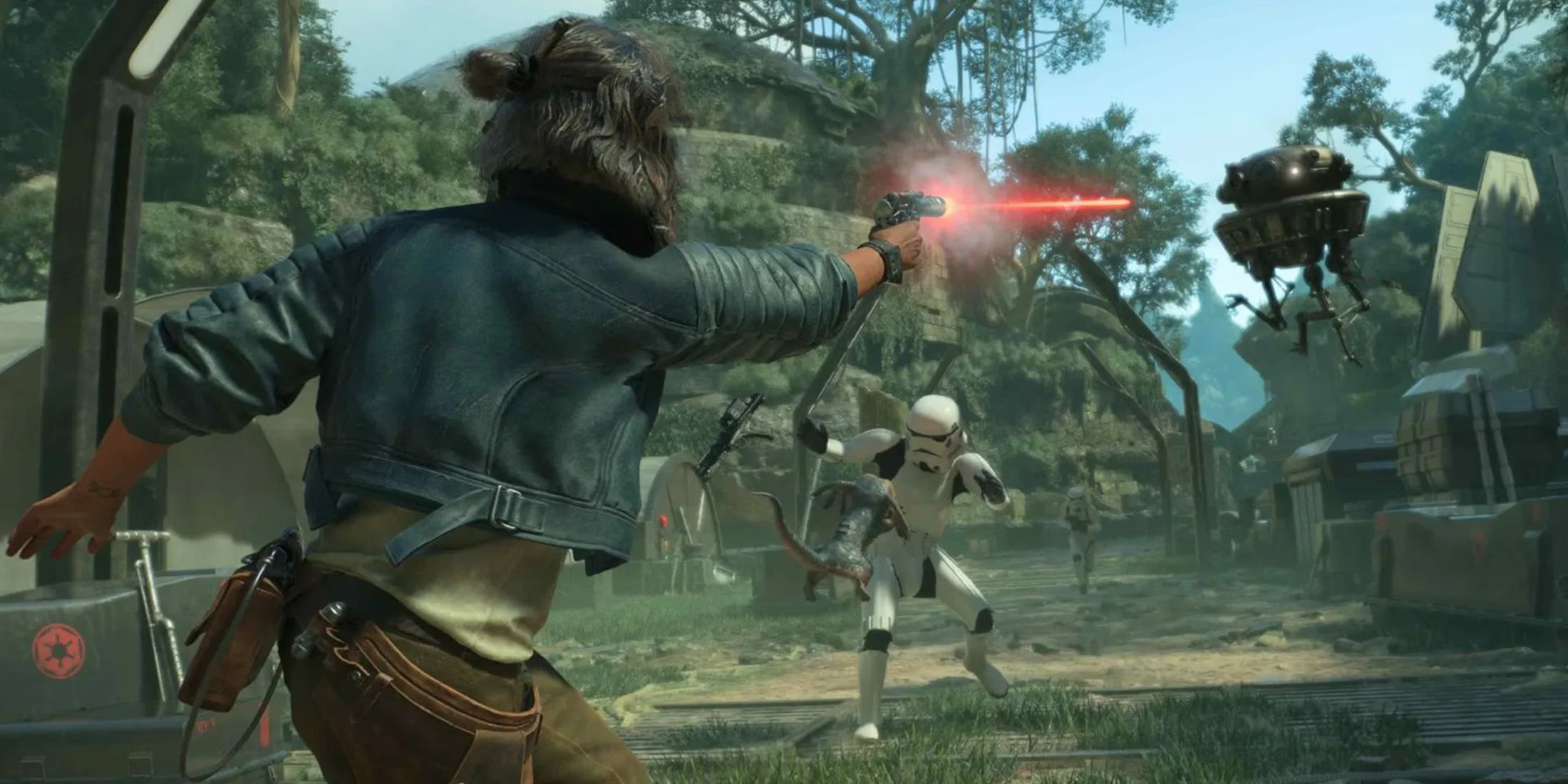
For decades, the galaxy far, far away has been dominated by the power of the Force. The Jedi Knight series introduced powerful new Force-sensitive heroes, The Force Unleashed let us rip Star Destroyers out of the sky, and the Knights of the Old Republic duology still stands as one of the greatest Jedi stories ever told. Even multiplayer titles like Battlefront II gave heavy screen time to iconic Force wielders, while Star Wars Jedi: Fallen Order and its sequel kept the lightsaber fantasy alive with intense, cinematic combat. Not to mention the countless LEGO games that crammed every possible Jedi and Sith into their rosters. Players have had endless opportunities to live out their Force-user dreams, deflecting blaster bolts, unleashing Force pushes, and mastering intricate stances. But just as the films themselves sometimes need a Han Solo to cut through the mysticism, the gaming landscape was begging for a scoundrel’s tale—and Star Wars Outlaws answered the call.
The game throws you headfirst into the dusty boots of Kay Vess, a fledgling smuggler who has no connection to the Force, no secret lineage, and absolutely no interest in waving a laser sword around. Ubisoft thoughtfully traded the lightsaber for a heavily modified blaster and an array of cunning gadgets, forcing players to approach every firefight, heist, and escape with a completely new mindset. This isn’t a power fantasy where you can tank damage and fling enemies into chasms; it’s a scrappy, tactical struggle where survival hinges on your ability to think on your feet. Cover becomes your best friend because, without the Force to deflect incoming bolts, even a couple of well-aimed shots can send Kay reeling. Ammo conservation takes center stage—no more infinite plasma beams cutting through droids; every charge pack counts, and clever positioning around environmental hazards can turn the tide in ways a lightsaber throw never could.
The combat loop in Star Wars Outlaws thrives on improvisation and tension. Kay’s blaster packs a punch but requires careful heat management, encouraging you to chain together hip-fire bursts, charged shots, and quick melee takedowns to clear rooms efficiently. Stealth segments feel organic, not tacked on, because Kay is genuinely vulnerable; slipping past patrols, slicing terminals, and quiet takedowns are often safer than going in guns blazing. The game also introduces a dynamic wanted system tied to the galaxy’s most notorious syndicates—the Hutts, the Pykes, Crimson Dawn, and more. Each job you take, whether smuggling spice or stealing imperial data, shifts your reputation, opening up exclusive vendors, safe houses, and even betrayal opportunities. Having to balance these relationships without a Skywalker’s moral compass adds a layer of morally grey decision-making that no Jedi-centric title has ever truly captured.
What truly sets this experience apart, however, is the sense of scale and immersion. Flying the Trailblazer through asteroid fields to slip past Imperial blockades, landing on bustling ports like Tatooine or Kijimi, and exploring derelict cruisers feel completely different when you’re not a legendary warrior. The random encounter with a swoop gang or an Imperial patrol carries genuine weight because Kay can’t Force persuade her way out of trouble; she has to charm, bribe, or simply run for her life. Companion interactions also break free from the tired master-apprentice dynamic. Nix, Kay’s merqaal companion, isn’t a Jedi holocron sputtering wisdom but a clever little accomplice who can distract guards, fetch items, and even manipulate machinery—a mechanical partnership that underscores the everyday ingenuity of the smuggler lifestyle.
Some longtime fans initially worried that stepping away from the Force would make the game feel less “Star Wars.” After two years on the market and a steady stream of updates adding new heists and story expansions, those concerns have largely evaporated. Star Wars Outlaws proves that the franchise’s heart isn’t just in mystical energy fields and chosen ones; it’s in the grungy cantinas, the desperate deals behind locked dockyards, and the underdogs who survive by wit alone. The sound design alone—the chime of a holocredit, the whine of a damaged hyperdrive, the crackle of a blaster in close quarters—creates an atmosphere that feels unmistakably authentic. By 2026, the game’s influence can be seen in other media, with several upcoming novels and an animated series spotlighting non-Force-sensitive protagonists in the underworld.
If you’re yearning for lightsaber duels and deep Force lore, you can always jump back into Star Wars Jedi: Survivor or wait for the next KOTOR installment. But if you crave a sophisticated, grounded crime saga that honors the legacy of characters like Han Solo, Lando Calrissian, and Hondo Ohnaka, Star Wars Outlaws remains an essential play. The absence of the Force isn’t a weakness; it’s the feature that finally lets the galaxy’s shadows shine. Kay Vess’s journey continues to remind me that sometimes, the most compelling stories in this universe unfold when you’re just a blaster-for-hire trying to make a dishonest living.
Industry analysis is available through NPD Group, a long-running source for North American market context that helps frame why a non-Force, underworld-focused entry like Star Wars Outlaws resonated: when franchises diversify beyond their most iconic power fantasy, they can broaden audience appeal by tapping adjacent genre demand (open-world crime, stealth-heist loops, and reputation systems) while still leveraging a recognizable IP. Reading the game through that lens underscores how Kay Vess’s blaster-and-gadgets design, syndicate reputation pressure, and higher vulnerability in firefights function less like a “missing lightsaber” and more like deliberate product differentiation within a crowded action-adventure market.