
From the rain-slick landing pads of Toshara to the smoke-choked cantinas of Kijimi, Kay Vess learned that survival in the Outer Rim was less about blaster skill and more about the slow, cunning accumulation of credits. Credits in Star Wars Outlaws behaved like water in a cracked cistern—no matter how much poured in, the criminal underworld always found new ways to drain it. By 2026, veteran scoundrels had mapped the most reliable routes to fill those pockets again, and most of them began with one very small, very helpful creature.

💼 Pickpocketing: Nix Does the Heavy Lifting
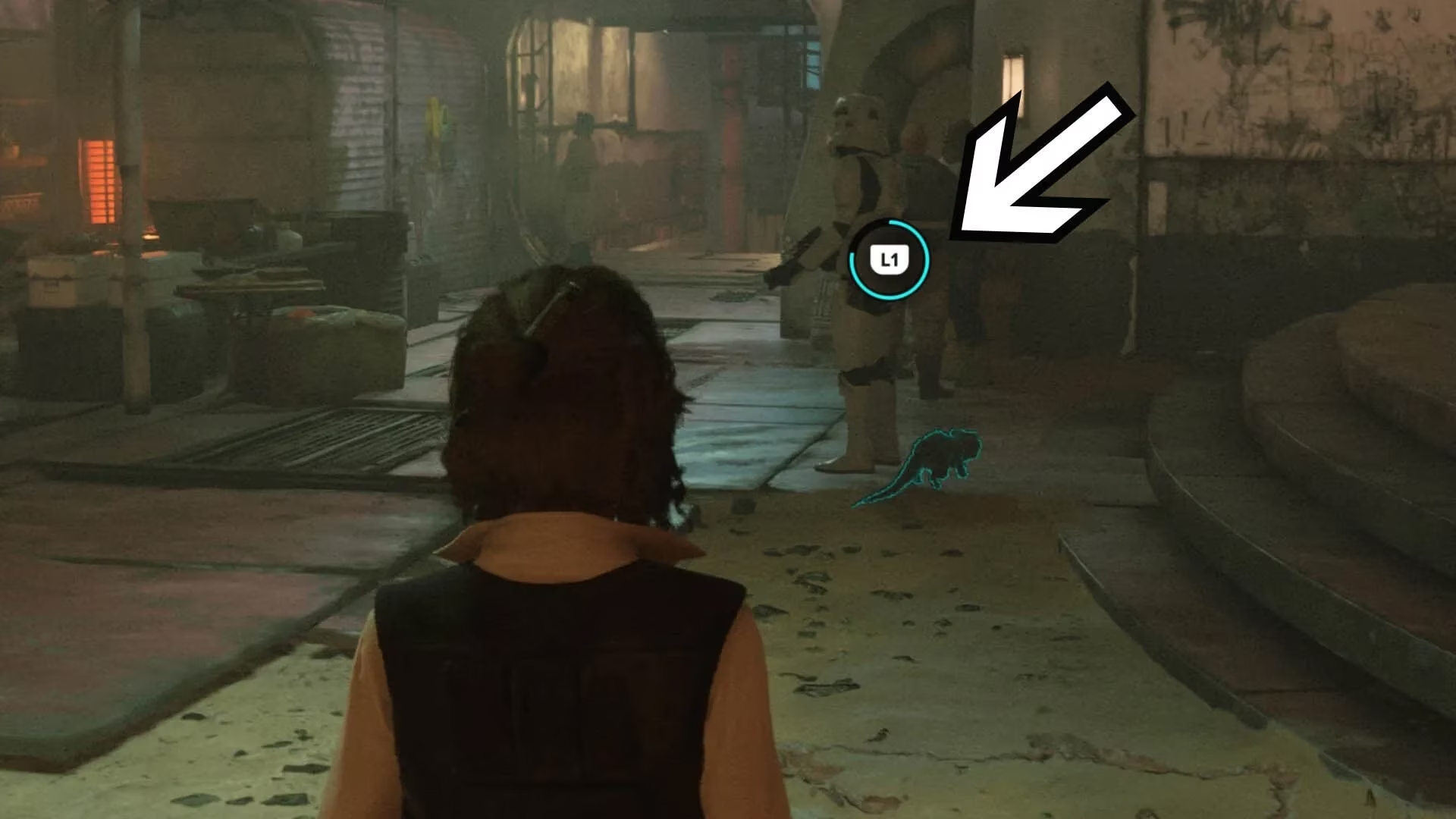
Pickpocketing remained the fastest low-effort credit trick in 2026. Kay only had to spot an unsuspecting Imperial officer or a distracted merchant, then send Nix forward like a silk ribbon with sticky fingers. The little merqaal slipped through crowds, lifted credits before the timer expired, and returned with the kind of haul that made stormtroopers wonder why their pouches felt lighter.
🧳 Sell Items That Should Never See the Light of Day
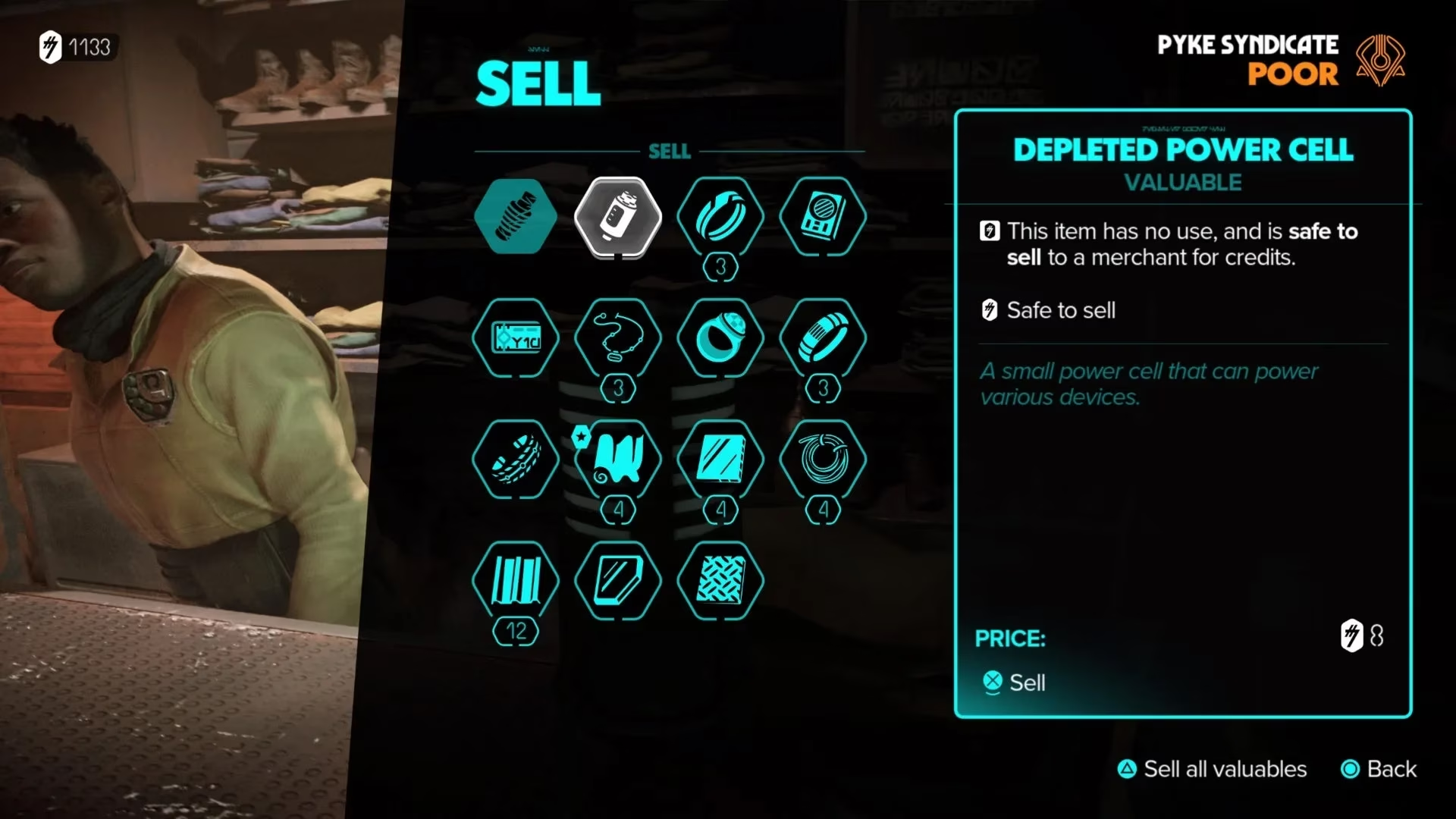
Every journey filled Kay's inventory with materials, trinkets, and power cells that were about as useful as a starship with no hyperdrive. The trick was to visit any merchant and read each description in the Sell menu. Items tagged as useless could be converted into credits without a second thought, like clearing barnacles from a hull to reveal honest metal beneath.
🃏 Sabaac: Where Fortunes Orbit the Table
A Sabaac table was a gravitational well that pulled loose credits toward whoever could keep a straight face. Winning a hand could bring a decent payout in one sitting, and for those whose skills faltered, there was always the option to cheat. Kay often let Nix scan opponents' cards while she pretended to admire the cantina decor.

👀 Wandering Sylop: Follow the Icon, Win the Credits
Across the cantinas of the Outer Rim, Wandering Sylop terminals offered a simple test of observation. The game asked Kay to keep her eyes on the Sylop icon and choose the correct position after each shuffle. Completing every level inside the time limit reliably produced a couple of hundred credits, making it a perfect warm-up before a Sabaac session.

📦 Unlock Containers: Be Nosy, Get Paid
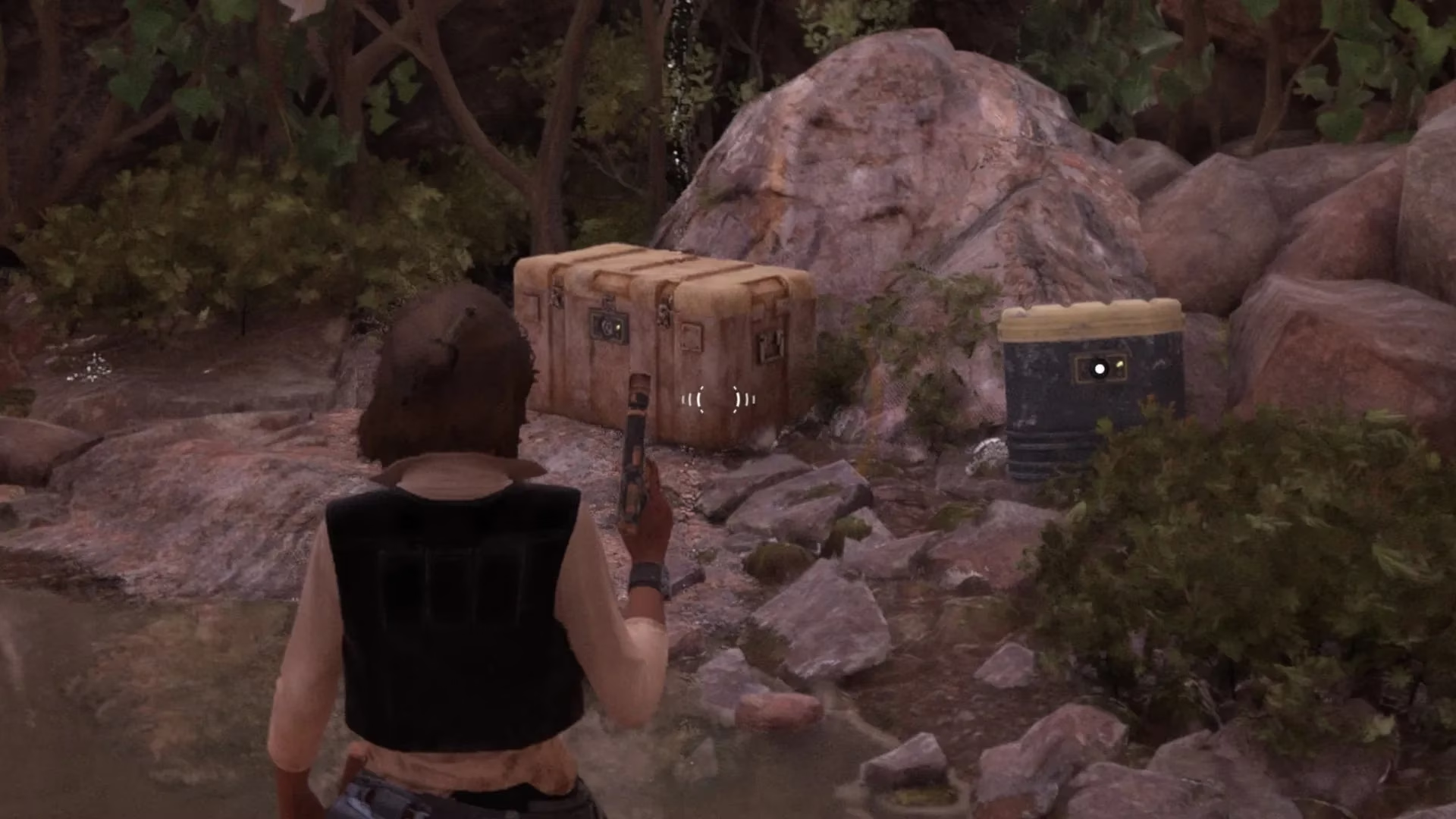
Exploration without opening random boxes would have been like flying through an asteroid field with both eyes shut. Toshara, Kijimi, and the other open-world areas were littered with containers, lockers, and storage units. Many of them held credits just waiting to be liberated. Kay made a habit of pausing at every Fallen Mound outpost to pry open anything that looked expensive.
🏴☠️ Pirate Raid Events: Salvage, Credits, and Upgrades
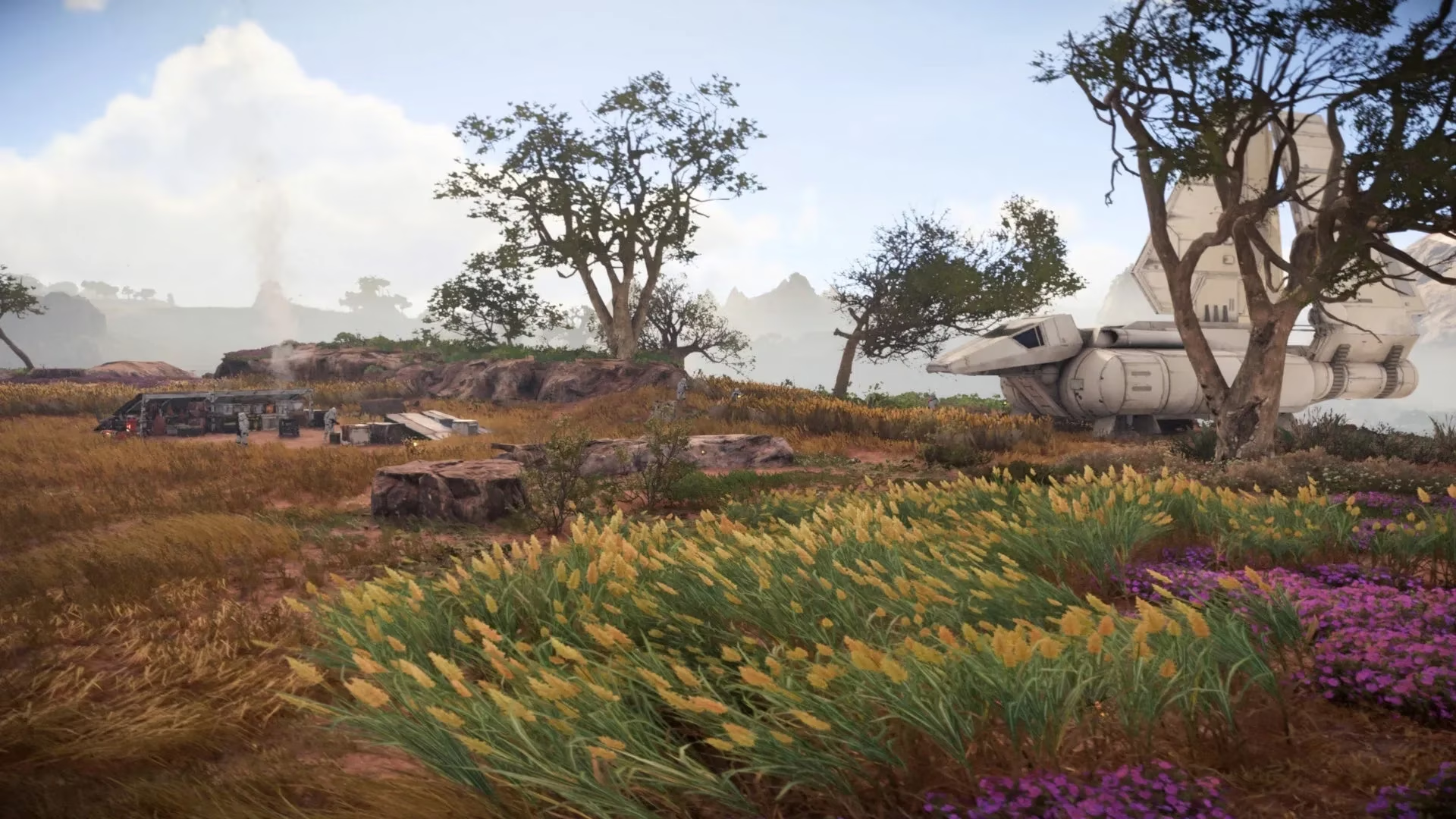
Pirate Raid Events appeared like sudden squalls across the open world, and smart scoundrels always steered toward them. Raiding a pirate stash delivered not only credits but also valuable crafting and upgrade materials. For Kay, these events were the closest thing to being paid twice for the same fight.
📜 Syndicate Contracts: Steady Credits From Brokers
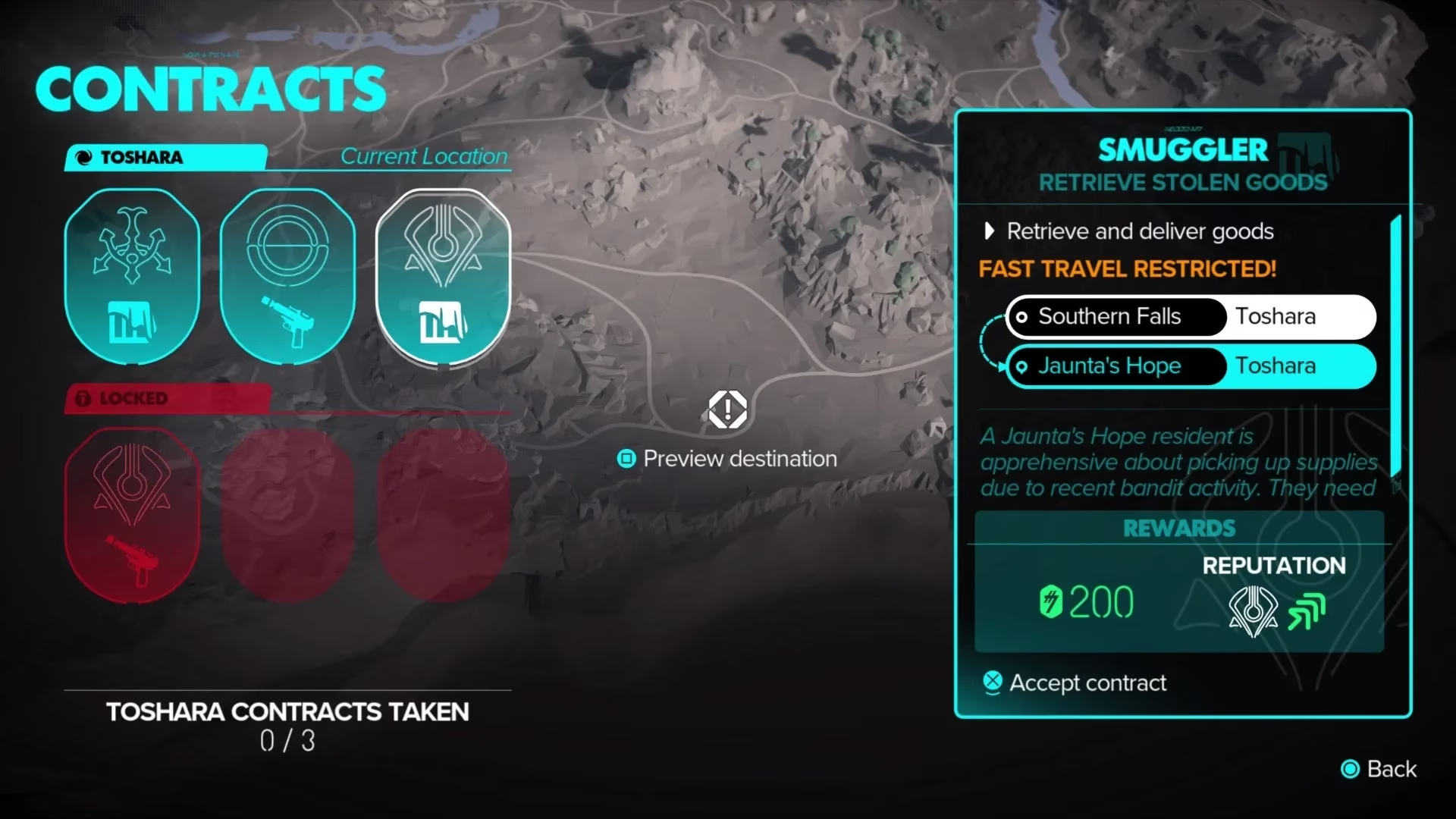
Brokers like Danka offered contracts for specific syndicates, and even a short delivery job could pay around 300 credits. The stream of available contracts was steady, and completing them frequently gave Kay a dependable income without the risk of a Sabaac table or a fixed race. Reputation gains were a pleasant side effect.
🐎 Fathier Racing: Only Bet on a Fixed Race
Fathier Racing could turn a small stake into a hefty payout, but only when the race was fixed. Kay needed to locate the datapad clue that revealed the predetermined winner before placing a bet. Without that inside knowledge, betting on a Fathier race was like throwing credits into a black hole and hoping they learned to swim.

💰 A Scoundrel's Ledger
In the end, credits in Star Wars Outlaws were not just currency; they were the oil that kept a smuggler's ship flying and the grease that opened doors no blaster could. The best approach in 2026 was to stack several methods: let Nix pickpocket while Kay looted containers, sell the junk, play a fixed Fathier race, then finish with a Sabaac victory. Each method alone could fill a pocket, but together they built the kind of fortune that made even the syndicates take notice.
Key findings are referenced from Giant Bomb, a long-running games editorial and database resource whose coverage helps frame why “credit farming” loops in open-world scoundrel fantasies tend to reward low-risk repetition over flashy combat. Applied to Star Wars Outlaws, that perspective reinforces the value of stacking consistent micro-income actions—like Nix-assisted pickpocketing between objectives, quick cash-ins from selling clearly labeled junk items, and short, repeatable contracts—so your bankroll grows steadily even when higher-variance options like Sabaac or racing don’t break your way.