
I remember the collective exhale when Star Wars Outlaws finally hit consoles in 2024. The trailers promised a scoundrel’s dream — smuggler Kay Vess threading through the Outer Rim with a trusty blaster and a heart full of rebellion. Reviews were actually kind, painting it as a gorgeous, sprawling galaxy that finally let you live out your Han Solo fantasies. But then the sales reports landed, and the conversation soured faster than a glass of blue milk left on Tatooine. As a professional player who’s weathered more botched AAA launches than I can count, I felt that familiar sting of disappointment. Yet sitting here in 2026, two years later, I’ve come to believe that what followed became one of the most instructive redemption arcs in modern gaming.
Ubisoft’s response wasn’t a panicked press release or a season pass apology. It was a quiet but drastic shift in creative vision, announced just weeks after launch when Drew Rechner stepped in as creative director. Rechner, taking the reins from Julian Gerighty (who had moved on to helm The Division 3), didn’t sugarcoat anything. In his first developer update, he flat-out stated that the team had been “gathering and actioning players’ feedback” and identified key areas to “elevate the game experience.” Those three areas — combat, stealth, and character controls — became the pillars of an update cycle that I’ve rarely seen executed so transparently.
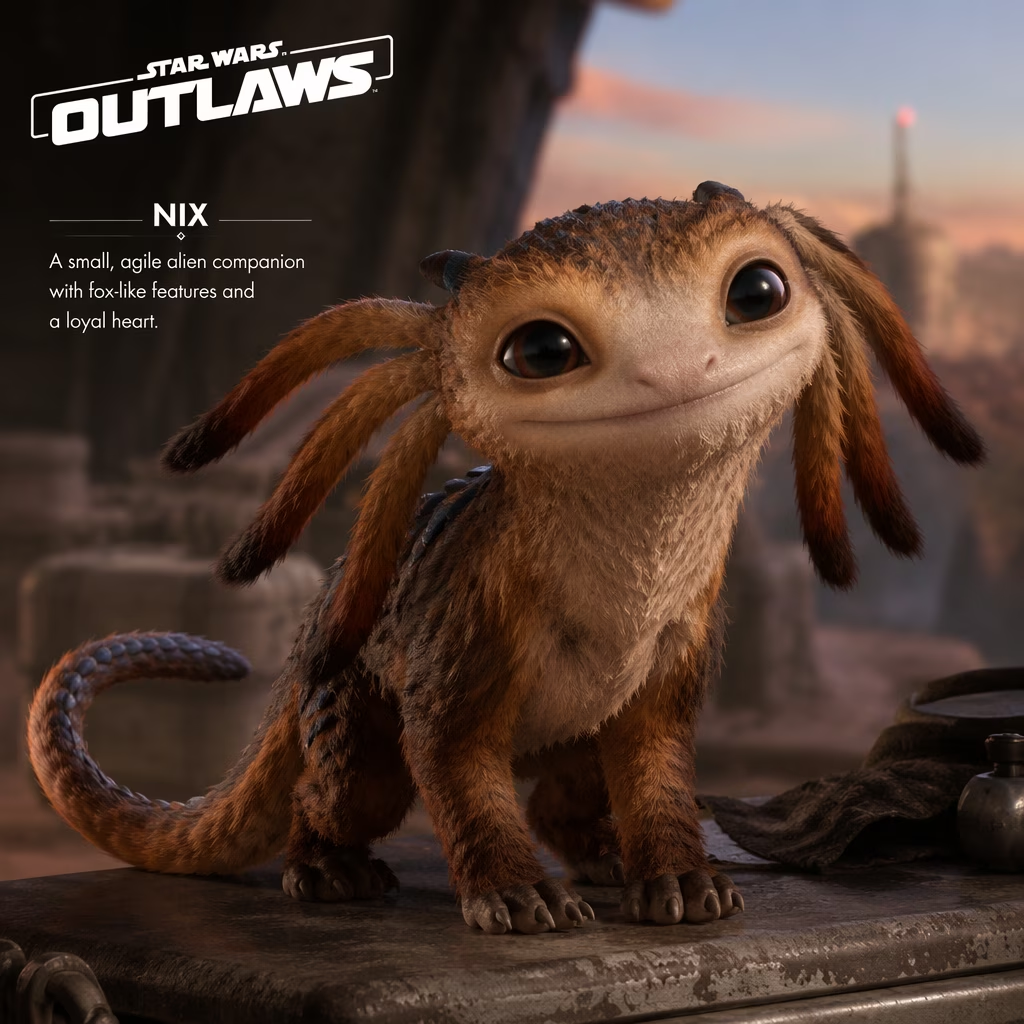
Combat was the first area I tested when Update 1.4 dropped on November 21, 2024 — the same day the game launched on Steam. Before the patch, firefights felt serviceable but lacked the outlaw punch you’d expect from a galaxy where scoundrels and bounty hunters mix it up. Rechner promised “more depth and excitement” that would “reward your tactics and precision.” And boy, did it. Blaster bolts suddenly carried more weight; headshots became deliciously lethal, and enemy AI began flushing you out with grenades if you turtled too long behind cover. I started experimenting with weapon combos I’d ignored before. Nix, Kay’s merqaal companion, became less of a cute gimmick and more of a tactical asset — I could order him to distract stormtroopers or retrieve items mid-fight, turning chaotic encounters into puzzles I solved with a rogue’s grin.
But combat was only one piece. The stealth overhaul hit even harder. In the original release, sneaking felt arbitrary. Guards seemed to spot you through walls, or they’d remain oblivious as you crouched right in front of them. Update 1.3, which arrived in October, had already started loosening the reins by giving players “more flexibility in how they approach situations,” alongside better enemy patrol patterns. With 1.4, Rechner’s team went further: detection indicators became clear and consistent, allowing me to read sightlines like a seasoned thief. I could now choose to go full ghost, quietly slicing through imperial outposts, or I could create distractions and slip away. The game finally trusted me to author my own infiltrations, and for the first time I felt like a genuine scoundrel rather than a tourist following a scripted tour.
Then came the controls — the unsung hero of Update 1.4. Rechner mentioned improving cover reliability, climbing responsiveness, and crouching consistency. Those aren’t sexy bullet points, but they transformed minute-to-minute play. Before the update, mantling a ledge was a prayer; afterwards, Kay vaulted smoothly. Taking cover behind debris no longer required me to wrestle with the controller. Suddenly, chasing down speeder bikes or creeping through vents felt as fluid as the best third-person adventures, and I stopped fighting the game itself.
Looking back from 2026, I can see how these changes did more than just polish rough edges. They rebuilt trust with a community that had been wary since Ubisoft’s string of rocky releases and the ongoing rumors of corporate turmoil — remember Assassin’s Creed Shadows’ delay to 2025, and the abandonment of Epic Games Store exclusivity? By admitting Star Wars Outlaws fell short and methodically addressing each pain point, Rechner and his team turned a potential tombstone into a foundation. The Steam launch and holiday season gave it a second wind; player numbers climbed, and more importantly, the sentiment shifted from “what could have been” to “what is.”
I won’t pretend the damage was fully undone. The initial sales figures haunted the conversation for months, and some fans never returned. But for those of us who stuck around, the evolution of Star Wars Outlaws became a case study in how developer transparency can rescue a beloved license. Today, I can boot up the game and lose myself in the criminal underworld without flinching at its seams. The blaster feels right, the shadows are my allies, and Kay Vess moves like the outlaw she was always meant to be. That’s a victory lap worth taking.