
The open world of Star Wars Outlaws offered players a commendable framework for a scoundrel's tale set within the iconic original trilogy era. While exploration within its bustling town hubs, filled with NPCs, provided rich conversational depth, the core gameplay loop of stealth, shootouts, and dogfights felt somewhat conventional. As the gaming world looks ahead from 2026, the foundation laid by the first title presents a clear and exciting opportunity for a sequel to significantly evolve, particularly by expanding on a promising but underutilized concept: systemic infiltration and disguise mechanics.
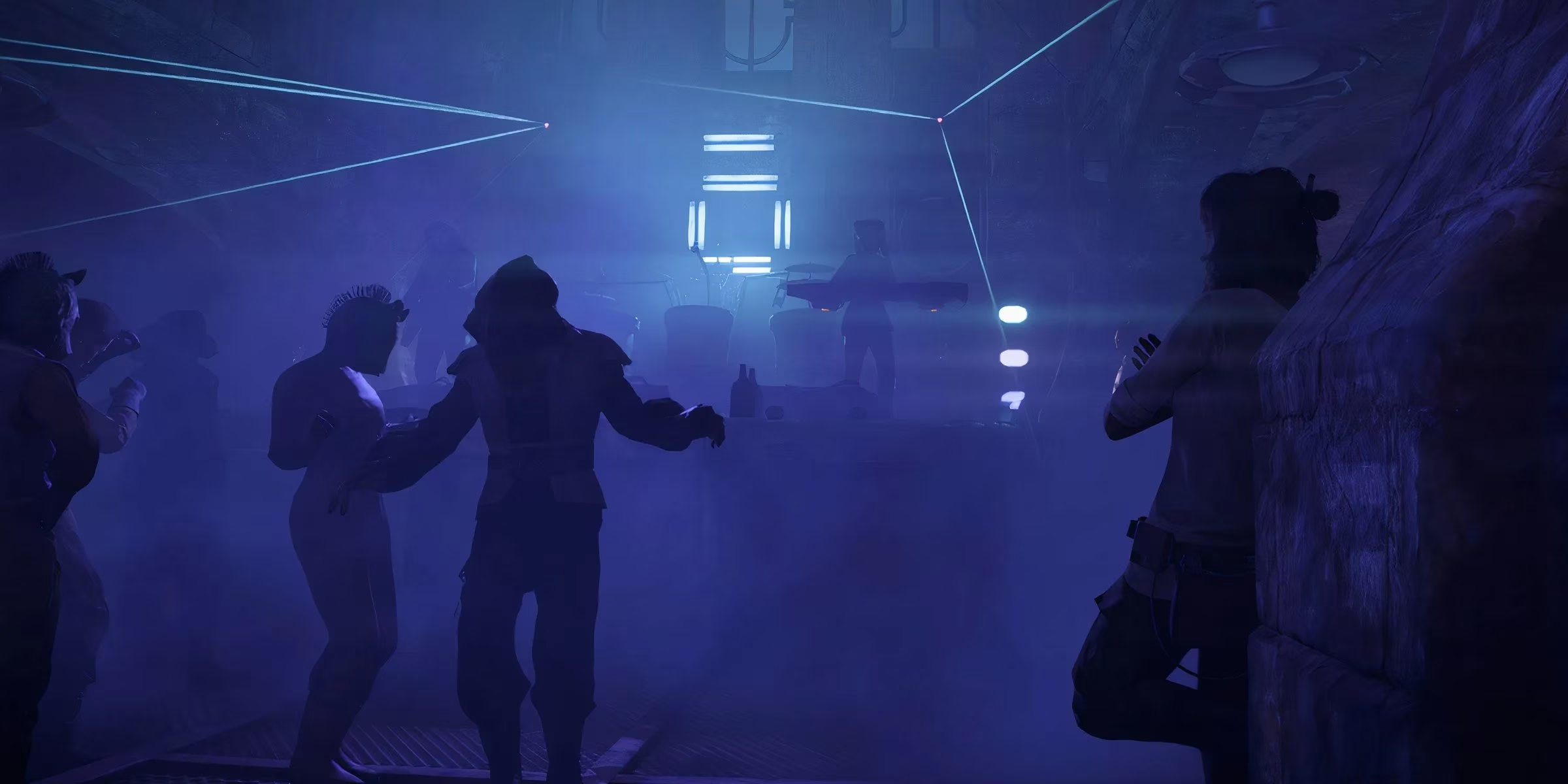
In the original Star Wars Outlaws, players were given a tantalizing glimpse of this potential during a specific mission. The sequence involved protagonist Kay Vess donning a stormtrooper uniform to covertly escort the captured Gedeek through an Imperial Security Bureau (ISB) vessel. This moment served as a delightful nod to fan-favorite scenes from A New Hope, where Han Solo and Luke Skywalker employed similar tactics. However, this feature remained a one-off scripted event rather than a fully integrated gameplay system. The post-credits scene further teased this idea, showing Kay impersonating an Imperial officer, yet the narrative logic of her exposed face going unrecognized after her prior exploits stretched believability.
The Missed Opportunity for Systemic Stealth
The neglect of this disguise mechanic represents a significant missed opportunity for enriching the game's stealth gameplay. Instead of being a central, replayable tactic, it was relegated to a narrative novelty. A sequel could transform this concept into a core pillar of gameplay, allowing players to strategically infiltrate restricted areas belonging to various factions, including the Galactic Empire, Crimson Dawn, or the Pyke Syndicate.
How a Disguise System Could Work:
-
Acquisition: Disguises shouldn't be freely given. Players could acquire them through challenging means:
-
Stealth Theft: Sneaking into guarded locations to steal uniforms from lockers or incapacitated enemies.
-
Mission Rewards: Earning them as rewards for completing specific, high-risk faction missions.
-
Black Market Purchase: Buying high-quality forgeries from unscrupulous vendors at a steep credit cost.
-
-
Infiltration: Once acquired, a disguise would grant temporary access to otherwise hostile or restricted zones. For example, a Crimson Dawn disguise could allow Kay to roam freely within their hideouts, regardless of her current reputation with that syndicate.
-
Maintaining Cover: The real challenge would lie in maintaining the disguise. This could involve:
-
Suspicion Meters: NPCs could have a dynamic suspicion meter that fills if Kay acts out of character (running, trespassing in ultra-secure areas, holding a weapon).
-
Dynamic Dialogue: Imperial officers or gang lieutenants might approach for impromptu status checks, forcing players to choose from quick-time dialogue options to maintain their cover. A failed check could instantly alert the entire facility.
-
Disguise Durability: Disguises could be damaged during firefights or environmental hazards, reducing their effectiveness and increasing suspicion.
-
Enhancing Reputation and Faction Dynamics
While Kay's reputation with criminal syndicates was a key social system in the first game, disguises could create fascinating new layers of interaction and consequence.
| Gameplay Scenario | Without Disguise Mechanic | With Enhanced Disguise Mechanic |
|---|---|---|
| Infiltrating an Imperial Outpost | Forced Stealth/Combat: Requires avoiding all patrols or engaging in full-scale combat. | Covert Infiltration: Player dons a stormtrooper uniform, walks through main gates, but must avoid officers and pass casual checks. |
| Retrieving an item from a Crimson Dawn vault | Locked by Reputation: Requires a "Good" or "Excellent" reputation for peaceful access. | Alternative Path: Use a disguise to bypass reputation gates, but with high risk of discovery deep inside enemy territory. |
| Consequences of Failure | Immediate Combat: Faction becomes hostile on sight. | Double Consequences: Faction becomes hostile, AND that specific disguise type becomes permanently recognized, rendering it useless for future infiltration attempts against that faction. |
Building a Richer Narrative Framework
The brief and underdeveloped interactions between Kay Vess and her mother in the third act of Star Wars Outlaws highlighted a narrative structure that felt rushed. A sequel with a robust disguise system could weave such personal stories directly into gameplay. Imagine missions where Kay must impersonate someone to get close to a target for information, or where maintaining a disguise during a crucial story moment leads to unique, branching dialogue and outcomes. The post-credits tease of a complicated mother-daughter relationship could be explored through missions that require Kay to infiltrate Imperial facilities where her mother is held, using guile and deception rather than just blasters.
Conclusion: A Clear Path Forward for a Sequel
As of 2026, the blueprint for a deeper, more engaging Star Wars Outlaws experience is evident. The original game established a solid world and core loop but left significant room for growth in systemic gameplay. By making infiltration and disguise mechanics a priority, a sequel could deliver the authentic scoundrel fantasy that fans envision—one where cleverness, adaptability, and sheer audacity are just as valuable tools as a quick blaster draw. It would move the gameplay beyond conventional stealth segments into a dynamic space of social stealth and meaningful player choice, finally allowing players to fully live out the fantasy of being the cleverest rogue in the galaxy. 👤➡️👥
For a sequel to truly surpass its predecessor, it must embrace these possibilities, turning a neat one-off feature into the defining, endlessly replayable heart of the experience.