In the vast, interconnected tapestry of the Star Wars universe, no story exists in a vacuum. Star Wars Outlaws, the 2026 open-world adventure, masterfully weaves itself into the rich fabric of the saga's history, not just through its original narrative of scoundrels and spice runs, but through a dense constellation of references, cameos, and lore-deepening callbacks. The game functions as a meticulous archaeologist, excavating familiar locations and moments from the iconic films and series, then repurposing them as the lived-in, often decaying backdrop for Kay Vess's rise to infamy. These aren't merely nostalgic winks; they are foundational pillars that anchor the player's journey in a specific, volatile moment in galactic history—the tumultuous years following the destruction of the first Death Star.
⏳ 8. Temporal Anchor: The Death Star's Echo
The game's opening is a masterclass in subtle world-building. A simple line of dialogue establishes that "it hasn't been long since the destruction of the Death Star." This event, the Battle of Yavin, acts as the galactic year zero, a temporal lighthouse by which all other events are measured. For players, it's an instant orientation: the story unfolds approximately three years after the events of A New Hope. The Empire is wounded but far from defeated, its grip tightening in response to the Rebellion's audacious victory, creating the perfect pressure cooker for the criminal underworld to thrive. The explosion that lit up the sky in 0 BBY continues to send political and social shockwaves through the Outer Rim, making every corner of the galaxy feel like it exists in the long shadow of that singular, hope-filled moment.
🏰 7. Jabba's Palace: A Den of Familiar Faces
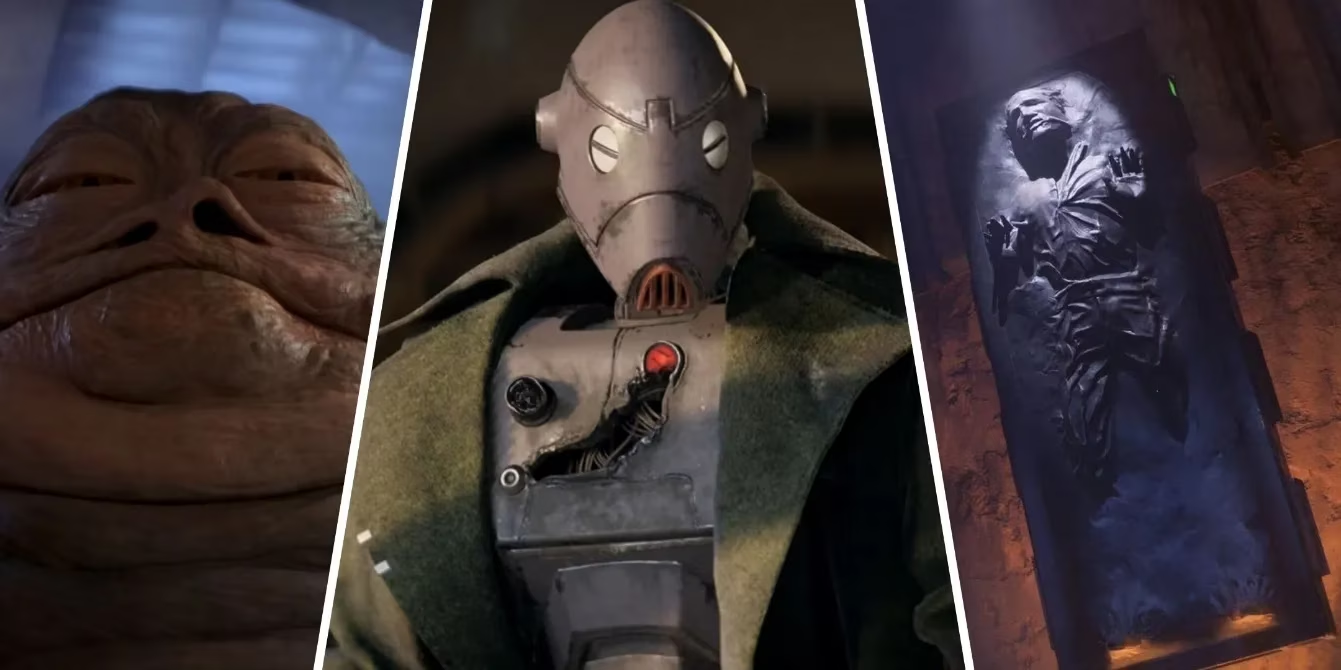
A mandatory stop on any Tatooine itinerary, Jabba's palace is less a location and more a character in its own right, a sprawling, pustulent beast of a building teeming with danger and decadence. Kay's "uninvited visit" here is a treasure trove of fan service done right. The player encounters:
-
Jabba the Hutt himself, holding court.
-
Bib Fortuna, elevated from a silent attendant to a character with actual narrative weight.
-
A silent, ominous cameo from Boba Fett, a specter of bounty hunting perfection.
-
The piece de résistance: Han Solo, frozen in carbonite, serving as a macabre wall decoration. This confirms the game's placement firmly after The Empire Strikes Back. The sequence culminates in a heart-pounding escape from Jabba's rancor, a creature whose canonical invincibility the game respectfully upholds.
🃏 6. Lando Calrissian: A Smooth Operator on Akiva
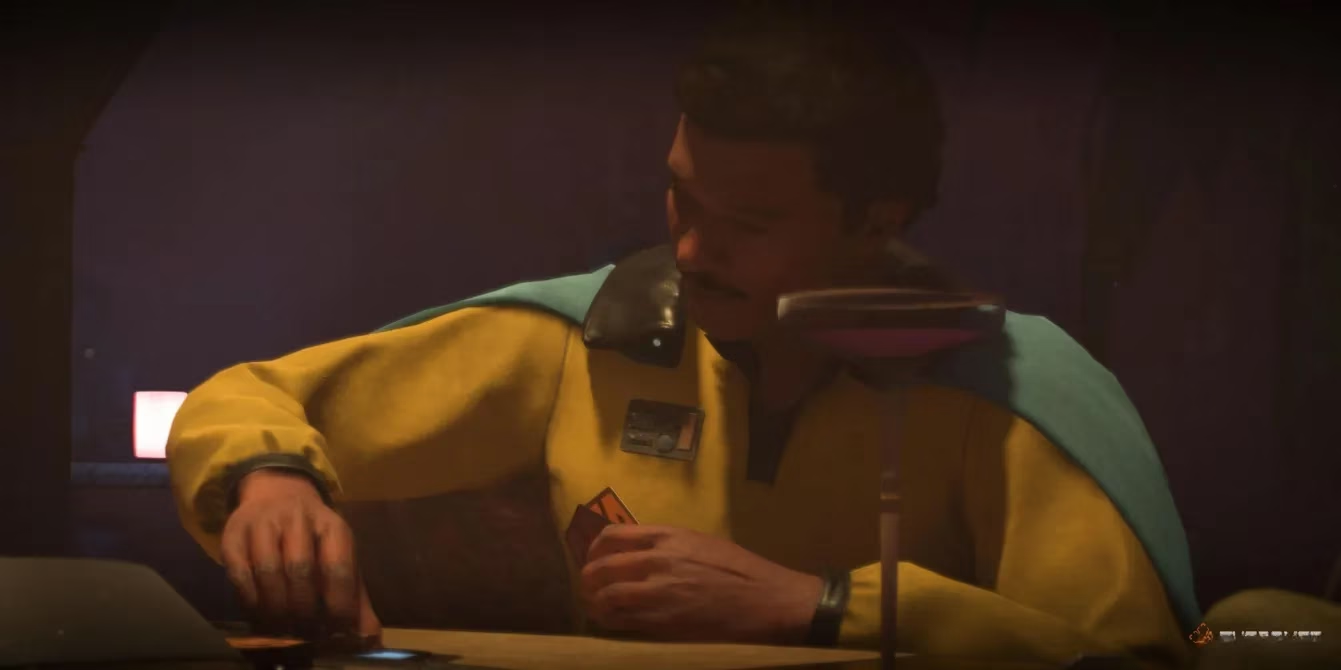
On the planet Akiva, Kay crosses paths with the galaxy's most charming gambler, Lando Calrissian. His presence is another chronological marker, as he is actively aiding the Rebel Alliance—a role he fully embraces post-Empire. True to form, Lando's assistance comes with a side of subterfuge; he teaches Kay a cheat for the card game Sabacc. Engaging him in a game feels like a rite of passage, though the mechanics are simple enough that his taught trick feels like using a thermal detonator to crack a nut. His appearance is a reminder that the Rebellion's network is vast and often relies on the underworld's best.
🦑 5. The Sarlacc Pit: A Grisly Landmark
Tatooine's dangers are often geological. Here, players don't just see a Sarlacc pit—they explore the cavernous, fossilized interior of a dead one. This isn't the Great Pit of Carkoon (Boba Fett's future predicament is still on the horizon), but a different specimen whose gargantuan corpse has been repurposed by scavengers. Venturing inside in search of loot is an experience both awe-inspiring and deeply unsettling, turning the creature into a labyrinthine, organic cathedral of bone and sand. It's a brilliantly disgusting piece of environmental storytelling that shows how the galaxy's inhabitants pragmatically reuse even its most terrifying fauna.
🏠 4. Lars Homestead: A Home Buried in Sand and Sorrow
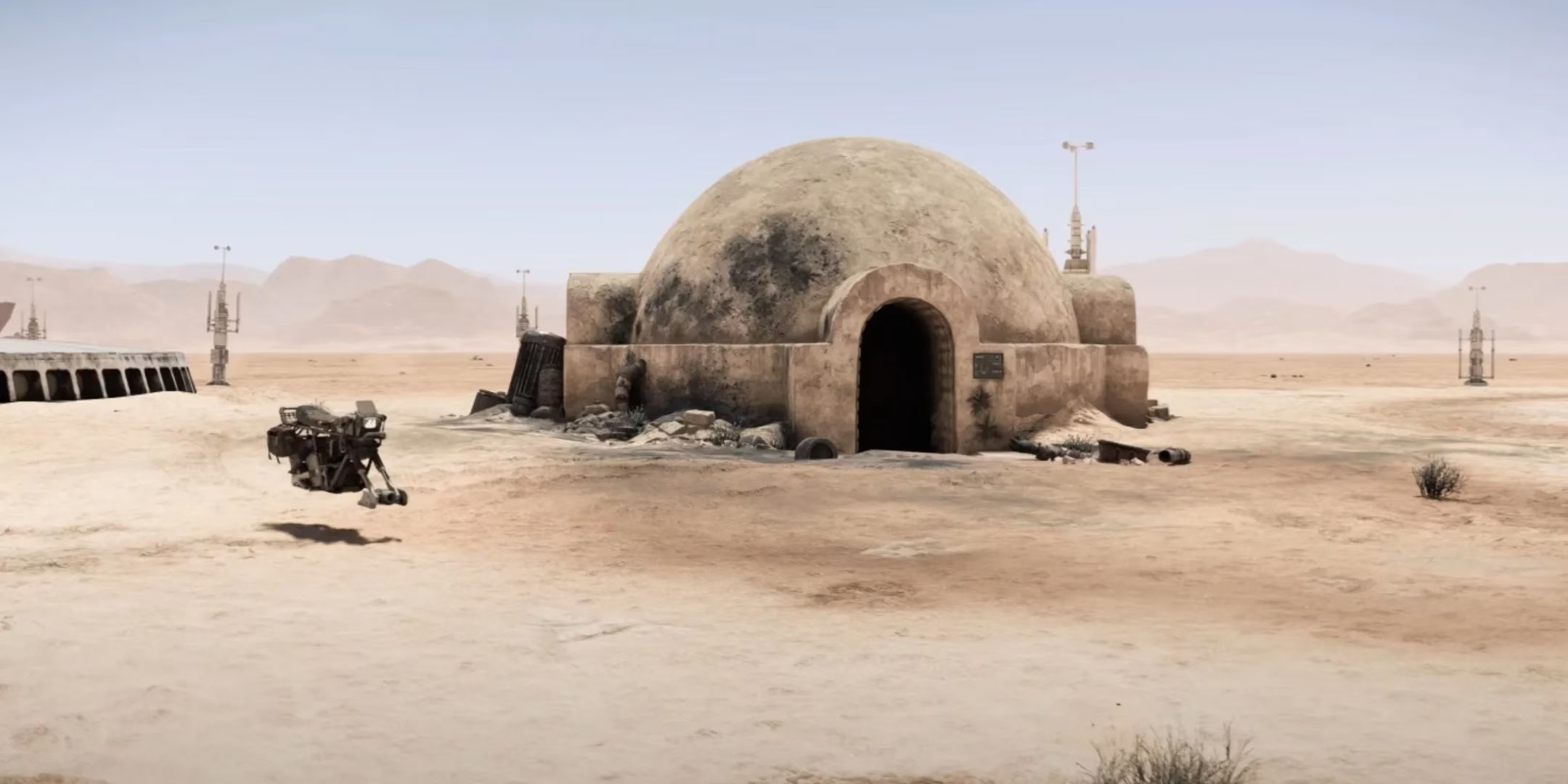
In the Jundland Wastes, players can stumble upon the burnt-out husk of the Lars moisture farm. The homestead now stands as a melancholy ghost ship stranded in a sea of dunes, a silent monument to the tragedy that set Luke Skywalker on his path. Two scavengers pick over the ruins, offering Kay a brief, off-hand explanation of the Imperial raid that destroyed it. Players can explore the sand-choked interior, where the echoes of a simple life—Owen, Beru, and a young Luke—are almost palpable beneath the dust. It's a quiet, powerful moment that connects Kay's gritty reality directly to the saga's heroic origins.
🔫 3. Chalmun's Cantina: The Debate Settled in Blaster Scorch
No tour of Mos Eisley is complete without a drink at the infamous Chalmun's Cantina. The game recreates the iconic, smoky interior with loving detail. The most delightful Easter egg? A distinctive blaster mark scorched into the wall. For discerning fans, this single carbon scoring is a hilarious and definitive answer to the eternal debate: Who shot first? The game's environmental artists quietly assert that, yes, Han Solo absolutely fired the first—and only—necessary shot against Greedo. It's a piece of set dressing that speaks volumes, a wink frozen in permacrete.
⚙️ 2. Echoes of the Clone Wars: Droids and Factories
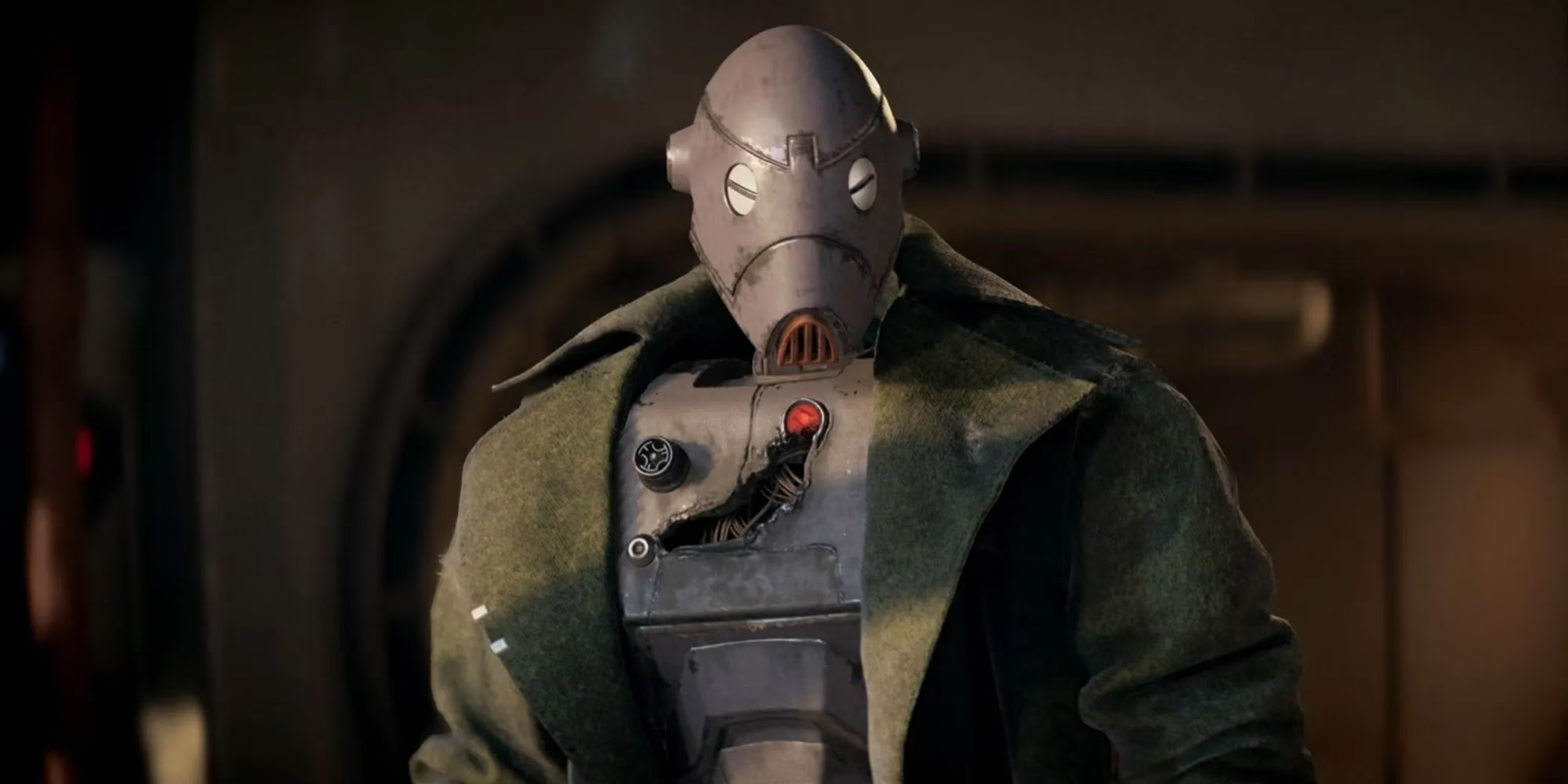
Outlaws cleverly reaches beyond the Original Trilogy, mining the prequel era for lore. The most direct link is Kay's companion, ND-5, a reprogrammed BX-series commando droid—a more advanced, lethal model from the Clone Wars. Furthermore, players can discover a derelict battle droid factory, its production lines still clogged with dormant B1 and B2 units, like a mechanical graveyard frozen in time. Mentions of General Grievous as the droids' intended commander tie this rusting relic directly to the conflict that shaped the galaxy a generation prior. These elements act as ancient, rusting pillars upon which the Empire's newer oppression is built.
😱 1. Darth Vader: The Galaxy's Omnipresent Specter
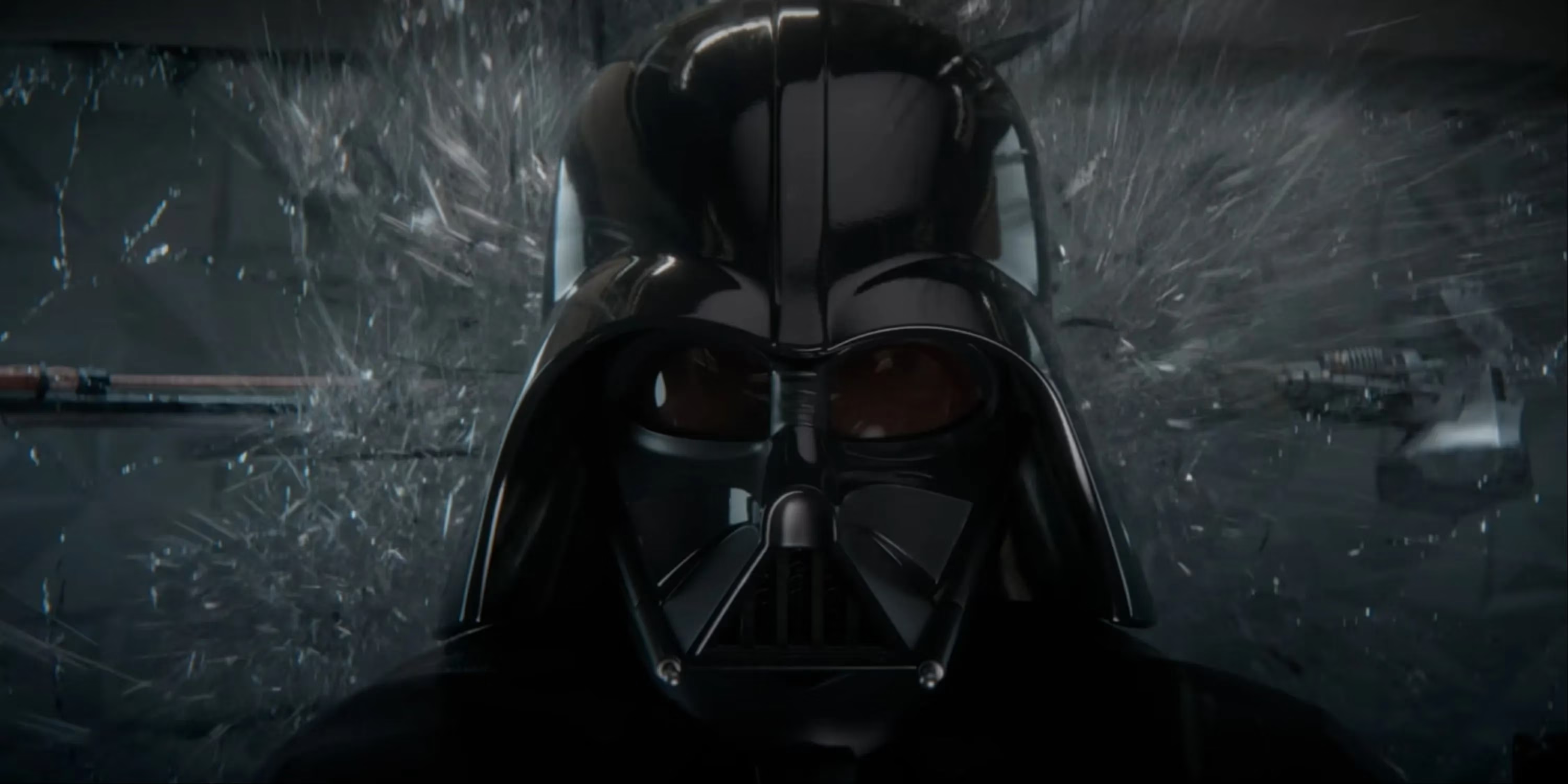
To complete its tour of iconic elements, the game includes a cameo from the Dark Lord of the Sith himself, Darth Vader. He has become, in many ways, the Stan Lee of the Star Wars universe, making brief, impactful appearances across media. His role in Outlaws is minimal—a direct confrontation would be a short and fatal end for Kay—but his presence is felt in a single, terrifyingly dramatic scene. Voiced by the prolific Scott Lawrence, Vader's appearance is a visceral reminder that even in the criminal underworld, the Empire's shadow, cold and absolute, is never far away. He is the ultimate force of nature, a passing storm that changes the atmosphere of any scene he enters.
🎯 Conclusion: A Living, Breathing Chronicle
Star Wars Outlaws succeeds not just as a game but as an interactive chronicle of a specific era. Every reference, from the colossal (the Death Star) to the intimate (a blaster mark on a wall), is a carefully placed tile in a massive mosaic. They transform the game world from a mere playground into a living museum of galactic history, where every dusty canyon and smoky cantina has a story whispering from its past. For the player, exploring these spaces becomes an act of archeology, uncovering the layers of myth, tragedy, and rebellion that make the Star Wars galaxy feel truly, enduringly alive.