
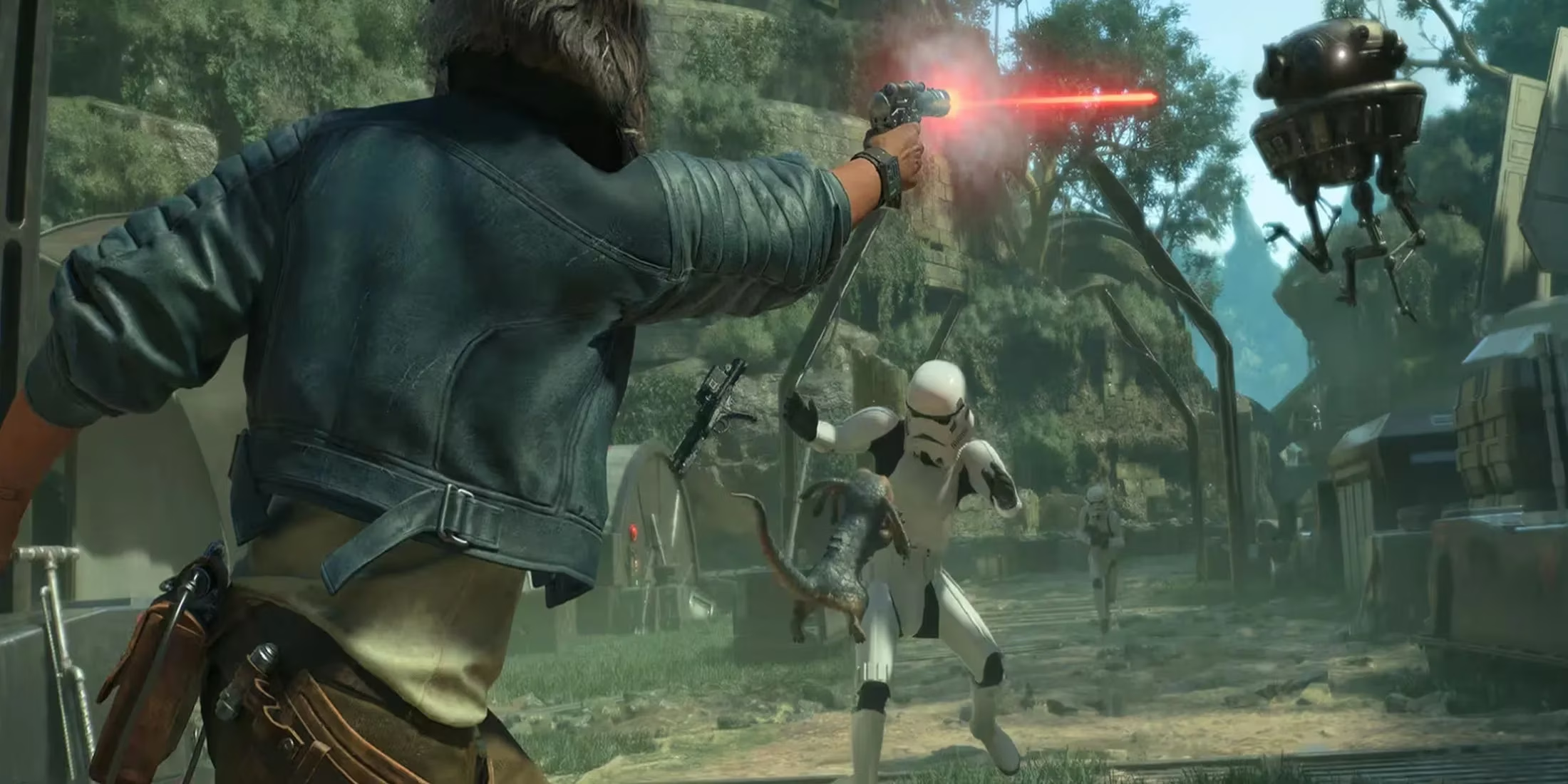
The release of Star Wars Outlaws in 2026 has delivered a landmark experience for the storied franchise, establishing itself as the inaugural, truly expansive open-world adventure set within the beloved galaxy far, far away. Developed by Ubisoft and Massive Entertainment, this title boldly steps away from the familiar lightsaber duels between Jedi and Sith, plunging players instead into the grimy, perilous underworld that thrives during the oppressive reign of the Galactic Empire. The game centers on the resourceful scoundrel Kay Vess, a hustler and thief navigating a treacherous path of double-dealings with notorious criminal syndicates while constantly evading Imperial forces. This focus on survival and subterfuge on the fringes of society evokes a powerful sense of nostalgia, harkening back to a classic Star Wars adventure from a bygone era: the 1996 Nintendo 64 title, Star Wars: Shadows of the Empire. The thematic and structural parallels between these two games are striking, suggesting that Outlaws not only carves its own path but also provides the perfect blueprint for a modern reimagining of its spiritual predecessor.
A Shared Underworld Vibe and Protagonist Archetype
At their core, both Star Wars Outlaws and Shadows of the Empire are narratives driven by morally ambiguous protagonists operating outside the traditional heroic framework. Kay Vess, the charismatic protagonist of Outlaws, is a classic scrappy survivor, using her wits, blaster, and loyal companion Nix to carve out a living in a hostile galaxy. This mirrors the role of Dash Rendar, the mercenary star of Shadows of the Empire. Both characters are essentially guns-for-hire, entangled in grand conspiracies that pit them against powerful criminal empires and the might of the Imperial military. Their journeys are not about restoring a galactic republic but about personal survival, profit, and navigating the complex web of allegiances that define the Star Wars underworld. This shared focus creates a distinct, grittier tone within the franchise, one that explores the consequences of the Empire's rule on everyday life and the criminals who flourish in its shadow.
Gameplay Philosophy: Variety and Galactic Scale
The mechanical ambitions of both titles reveal a shared desire to deliver a varied, galaxy-spanning experience. Shadows of the Empire, for its time, was remarkably ambitious in its scope:
-
Third-Person Adventure: Ground-based sections featuring exploration, platforming, and blaster combat.
-
Vehicle Sequences: Iconic levels like the Battle of Hoth, putting players in the cockpit of a snowspeeder.
-
Space Combat: Piloting Dash's ship, the Outrider, in intense dogfights against TIE fighters and other threats.
This trilogy of gameplay styles—on-foot adventuring, vehicular mayhem, and starship combat—created a holistic Star Wars fantasy. Star Wars Outlaws brilliantly executes a modern, seamless interpretation of this philosophy. Players fluidly transition from exploring densely detailed urban hubs like Mirogana on foot, to engaging in high-speed speeder chases across open-world landscapes, to piloting Kay's ship, the Trailblazer, for travel, smuggling runs, and thrilling space battles. The game's open-world design allows these elements to interconnect organically, fulfilling the promise that Shadows of the Empire hinted at but was technologically constrained from fully realizing.
Iconic Locales and World-Building
A key strength of both games is their dedication to transporting players to iconic and immersive locations within the Star Wars universe. Shadows of the Empire took players to a diverse set of planets:
-
Hoth: The frigid ice planet, setting for a legendary battle.
-
Tatooine: The sun-scorched desert world of Jabba the Hutt.
-
Coruscant: The ecumenopolis, the galaxy's towering capital.
-
Ord Mantell: A snowy mining planet turned battleground.
Each location offered a distinct visual identity and altered gameplay dynamics. Star Wars Outlaws builds upon this foundation with breathtaking fidelity, presenting fully realized, open-world versions of planets like Tatooine and Kijimi. These are not mere backdrop levels but living, breathing ecosystems. Cantinas bustle with diverse aliens, Imperial patrols loom with palpable threat, and the environments tell stories of their own through meticulous environmental design. The sense of place in Outlaws is unparalleled, making the galaxy feel authentically "lived-in," a direct evolution of the world-building Shadows pioneered.
The Case for a Modern Shadows of the Empire Remake
The profound similarities between the two games, coupled with the technological and design mastery demonstrated in Star Wars Outlaws, present a compelling argument for a ground-up remake of Shadows of the Empire. Utilizing Outlaws as a foundational template could transform the classic into a definitive modern experience.
How a Remake Could Evolve Using Outlaws as a Base:
| Shadows of the Empire Element | Modern Evolution via Outlaws' Framework |
|---|---|
| Linear, level-based planet visits | Seamless open-world hubs for Coruscant's underworld, Tatooine's dune seas, etc. |
| Segmented vehicle/space sections | Integrated systems: freely pilot the Outrider between planets, engage in dynamic space combat. |
| Dash Rendar's basic blaster combat | Deepened third-person combat with cover systems, gadget use (like the jetpack), and melee options. |
| Simple faction interactions | A full-fledged reputation system with Black Sun, the Empire, and other groups, affecting missions and prices. |
| Classic Star Wars soundtrack & sounds | Authentic, immersive audio design building on Outlaws' stellar soundscape. |
The narrative of Shadows—involving the kidnapping of Princess Leia by Prince Xizor of Black Sun and Dash Rendar's gritty rescue mission—is ripe for expansion. A remake could flesh out Coruscant's lower levels as a sprawling open-world district, make the hunt for clues a non-linear investigation, and deepen the conflict with Xizor into a more personal rivalry. The core appeal of playing a morally flexible mercenary caught between the Rebellion and a sinister crime lord aligns perfectly with the tone Outlaws has so successfully established.
Conclusion: A New Legacy Forged from the Past
Star Wars Outlaws stands as a triumphant achievement, proving that the galaxy's stories extend far beyond the Jedi. In doing so, it has inadvertently built a bridge back to one of the franchise's most beloved and innovative earlier adventures. The game's sophisticated open-world systems, compelling criminal underworld focus, and seamless blend of gameplay styles represent the natural, evolved state of the vision first articulated by Star Wars: Shadows of the Empire nearly three decades prior. For a generation of players, Shadows was a formative Star Wars experience; for a new generation, Outlaws is fulfilling that same role. A remake of the classic, rebuilt with the tools, scale, and philosophy of Outlaws, would not merely be a nostalgic revisit. It would be a celebration of the franchise's enduring versatility and a powerful demonstration of how its timeless tales can be reborn for the modern age, continuing the run of high-quality interactive Star Wars storytelling that fans are now enjoying.