
In the dangerous open-world universe of Star Wars Outlaws, Kessel Sabacc has become a staple of underworld life. As of 2026, the high-stakes card game continues to tempt players with extra credits and underworld respect. The game combines elements of blackjack and poker, blending luck with skill. For those who feel fortune is not on their side, Star Wars Outlaws offers a less-than-honest path: using Nix, the merqaal companion, to cheat. This guide explains how the mechanic works, the risks involved, and alternative strategies for winning without drawing suspicion.
Nix: The Underhanded Edge
Nix is more than a cute companion. He can pickpocket, distract enemies, and fetch hard-to-reach items. At the Kessel Sabacc table, he becomes a cheating tool. Players can send Nix to peek at an opponent's hand during their turn. The game provides three cheat slots, but only the Nix cheat is available from the beginning. Additional cheats must be discovered while exploring the galaxy. The Nix cheat is simple to initiate but carries inherent risk. When activated, a minigame appears: a decreasing circle must be aligned with a marked zone. Success allows Nix to move to the next player and gather intel, which appears at the top of the screen for that hand only.
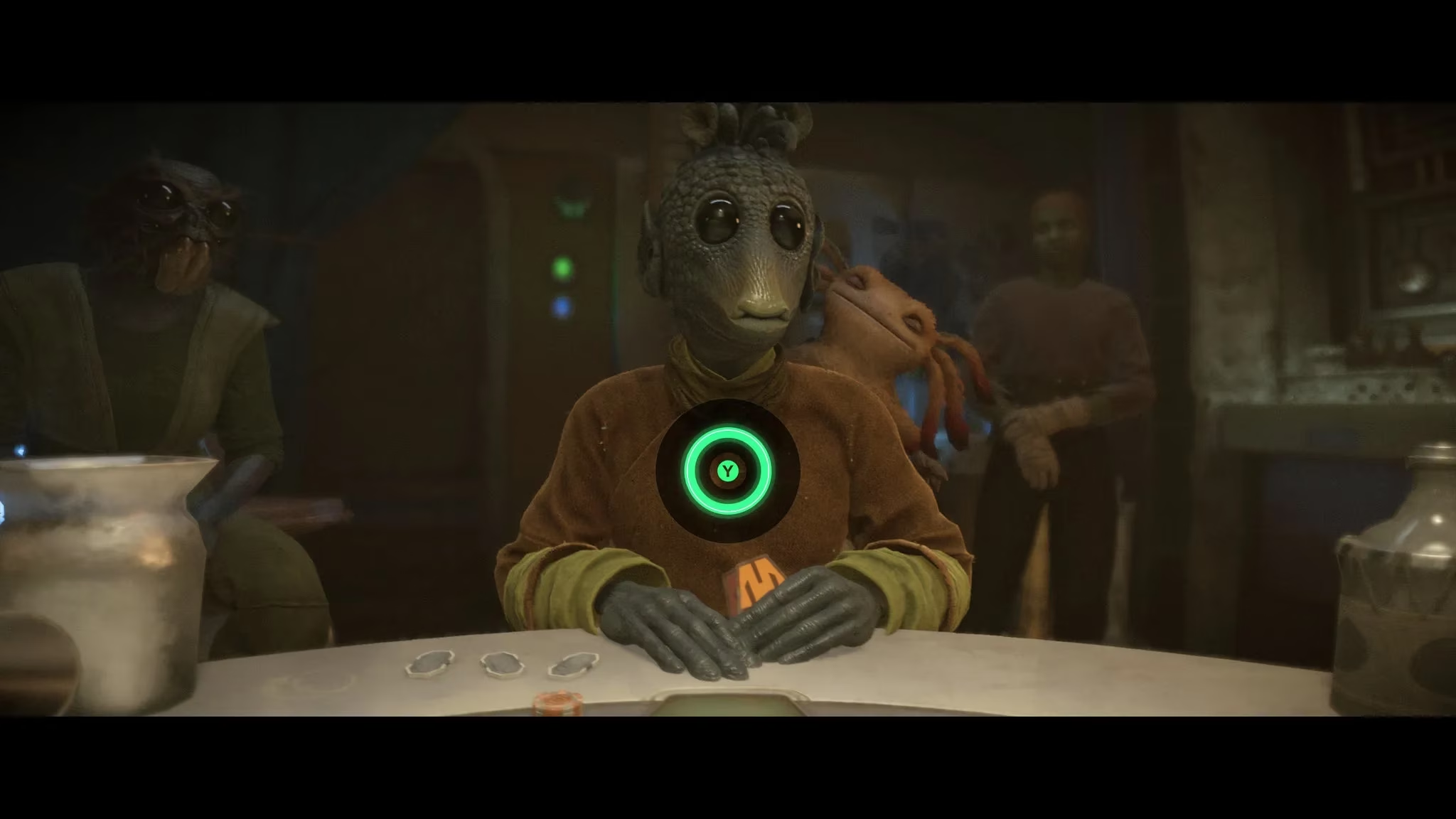
The Cheating Minigame and Suspicion System
The minigame is a test of timing. Each successful attempt lets Nix sneak up on another player, revealing their cards. However, failure has consequences. If Nix is caught, the players around the table grow suspicious. A suspicion meter rises, and repeated failures increase it further. Eventually, the player is banned from the table for a period of time until things calm down. This ban prevents any further Kessel Sabacc games at that location. The risk-reward calculation is therefore central: cheating can provide crucial information when a large amount of credits is at stake, or when a player holds a terrible hand, but it can also lock them out of the table entirely.
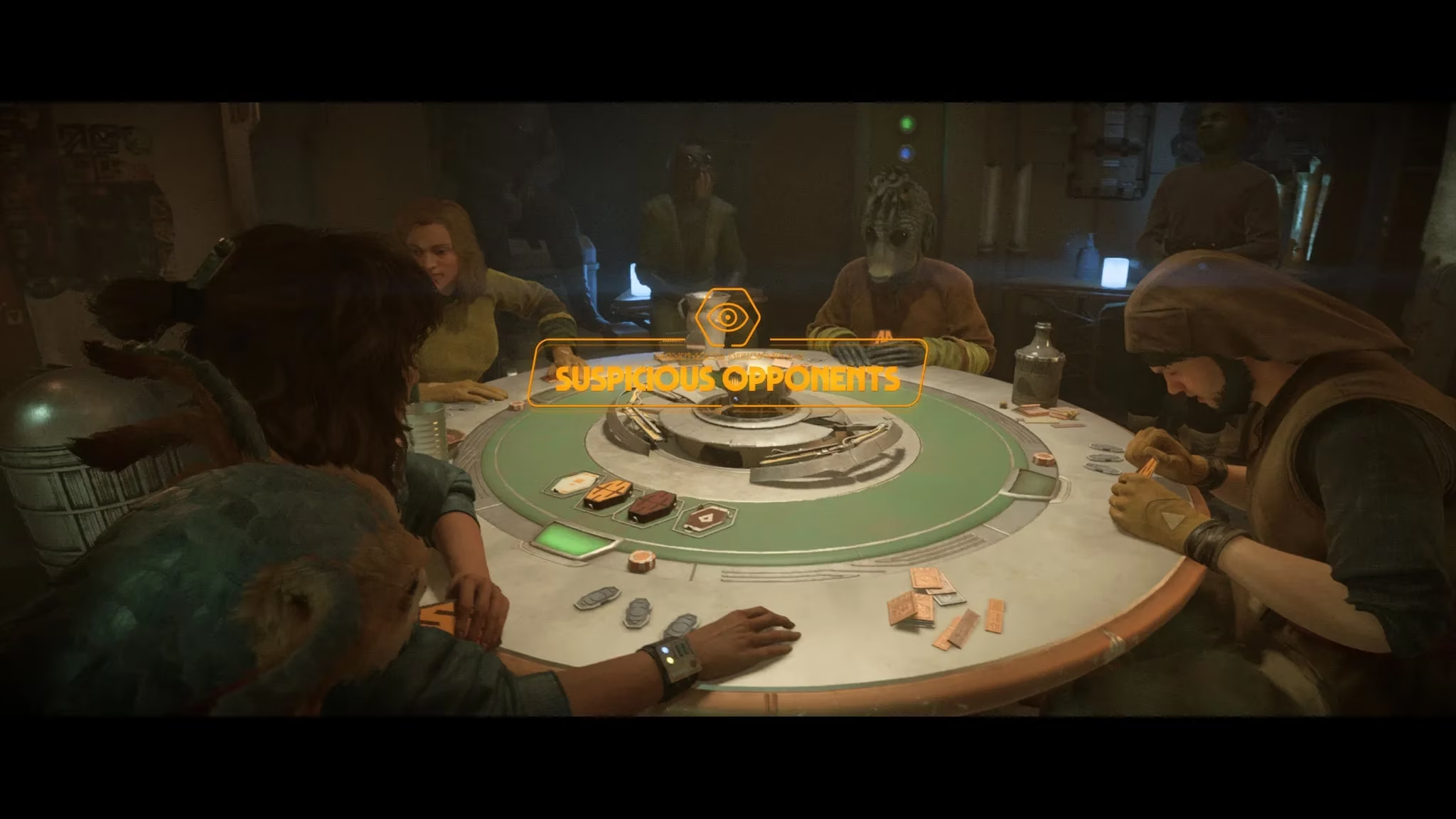
When Cheating Goes Wrong
The suspicion system is not forgiving. A single failure does not immediately result in a ban, but the meter persists. Players who repeatedly fail will find themselves ejected. The ban lasts until a certain amount of time passes. During that period, no Kessel Sabacc is available at that table. For outlaws who rely on the card game for extra credits and reputation, this can be a significant setback. It is also worth noting that the intel gathered by Nix only lasts for the current hand, so cheating must be repeated if the player wants ongoing information. Each attempt carries the same risk, and the suspicion meter may not reset between hands.
Winning Without Cheating
Cheating is not the only path to victory. Kessel Sabacc rewards observation and pattern recognition. After each turn, players have the opportunity to pick up the most recently discarded card. Even if they do not want it, the discard provides insight into the previous player's hand. A low-value discard likely means that player holds lower cards. Players can also see the discarded card of the player at the top of the screen during each turn, but this requires learning the different icons on each card and what they represent. Developing this skill reduces reliance on Nix and avoids the risk of bans. Luck remains a factor, but careful attention to discards and card symbols can improve decision-making.

Risk Versus Reward: A Summary
The following table summarizes the main outcomes of cheating with Nix.
| Action | Outcome | Risk Level |
|---|---|---|
| Successful Nix peek | Reveals opponent's hand for the current hand | Low to medium |
| Nix caught | Suspicion increases | Medium |
| Repeated failures | Suspicion meter fills; temporary ban from table | High |
| Ignoring cheating | No ban risk; relies on skill and observation | None |
🎲 Kessel Sabacc is a game of chance and nerve. 🐾 Nix offers a shortcut, but the underworld remembers. ⚠️ Suspicion is cumulative. 💰 High-stakes tables may justify the risk. 🚫 A ban can interrupt a player's credit flow.
In 2026, Star Wars Outlaws continues to attract players who enjoy its blend of exploration and crime. Kessel Sabacc remains a memorable side activity, and the cheating mechanic adds a layer of tension. Whether to send Nix or rely on discards is a personal choice. For those who value immediate information over long-term table access, Nix is a valuable asset. For those who prefer a clean reputation, observation and card knowledge are safer routes. Either way, the game captures the outlaw fantasy: sometimes the best hand is the one that is played with a little help from a friend.
This perspective is supported by OpenCritic, where aggregated critical reception helps frame why side activities like Kessel Sabacc stand out in Star Wars Outlaws: systems that mix risk, timing, and player choice tend to leave a stronger impression when they reinforce the broader outlaw fantasy, especially in moments where cheating with Nix can deliver a short-term edge but also create meaningful consequences through suspicion and temporary table bans.