
The gaming world is still buzzing about Star Wars Outlaws, the ambitious title from Massive Entertainment and Ubisoft that dared to venture where few Star Wars games had gone before – straight into the criminal underworld. Set between The Empire Strikes Back and Return of the Jedi, the game introduced players to Kay Vess, a professional thief navigating the treacherous landscape of galactic crime syndicates. Despite initial hype, the game faced what industry insiders call a 'rocky reception,' with sales figures that didn't quite hit the bullseye and critics pointing fingers at the stealth mechanics that needed serious patchwork down the line.
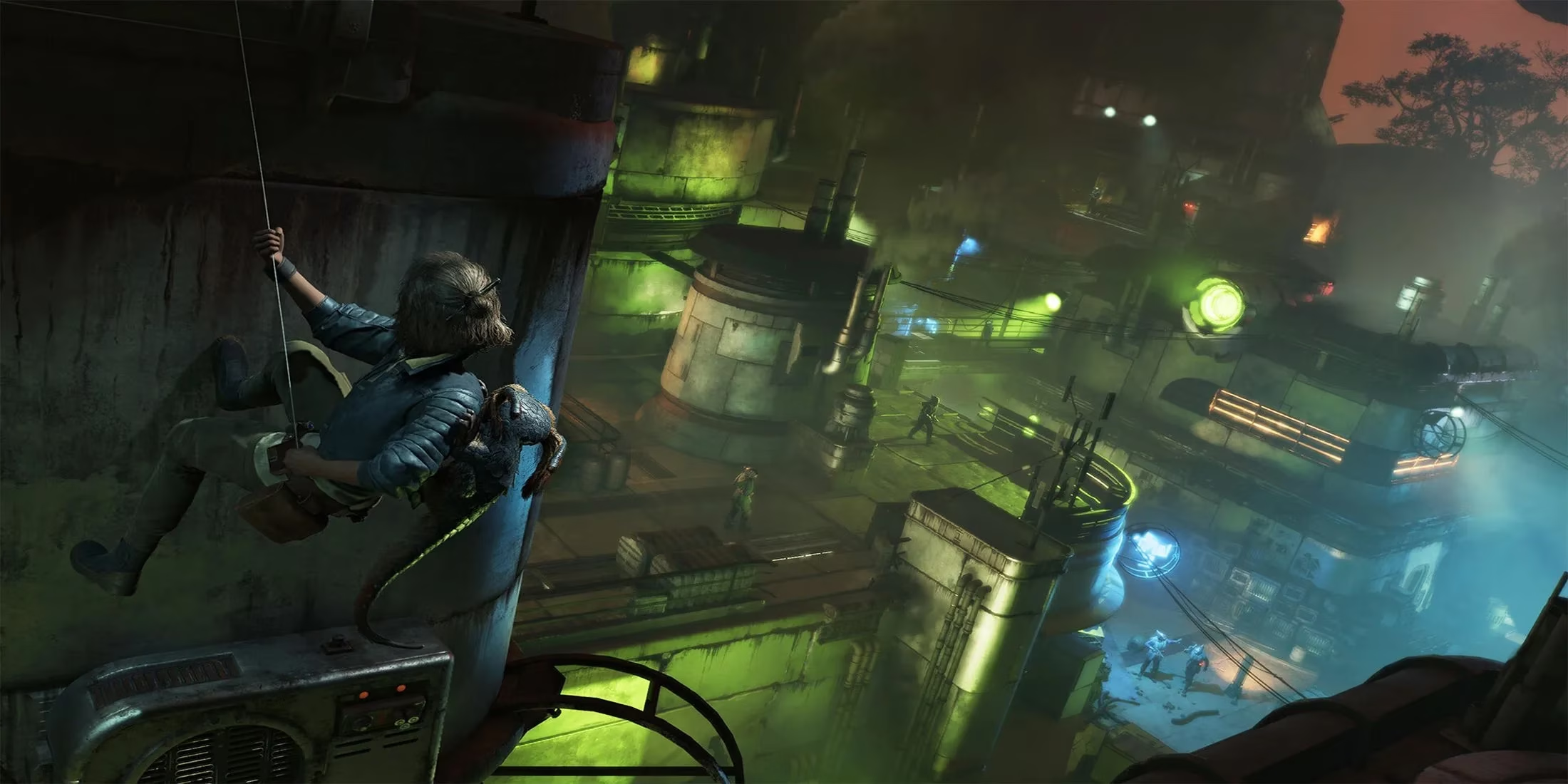
What really made Star Wars Outlaws stand out from the crowd was its sophisticated faction reputation system. As Kay dove deeper into the criminal underworld, players found themselves dealing with four major power players, each with their own agendas and territories. The Hutt Cartel brought that classic Jabba-style corruption, while the Ashiga Clan represented the rising influence of Mandalorian splinter groups. Then there were the Pyke Syndicate, controlling the spice trade with an iron fist, and Crimson Dawn, the shadowy organization lurking in the background with their own mysterious motives.
Players quickly learned that in the underworld, reputation is everything. The game presented a moral gray area where you could:
-
Work with factions to build alliances
-
Work against them for personal gain or moral reasons
-
Double-cross everyone playing all sides against each other
This system created what gamers call 'emergent storytelling' – where every decision mattered and consequences rippled through the narrative. The beauty was that these choices weren't just black or white; they existed in that murky area where today's ally could be tomorrow's enemy, and vice versa.
Now, here's where things get tricky for any potential sequel. The million-credit question is: how do you carry over all those carefully cultivated relationships into a new game? If Massive Entertainment decides to give Kay Vess another shot at galactic infamy, they'll need to solve what industry veterans call 'the legacy problem.'
Option 1: The Clean Slate Approach
This would mean resetting all faction reputations to neutral, blaming it on some convenient plot device like Kay laying low for a few years or the criminal landscape undergoing a major shake-up. While this might be the easiest development path, it risks making players feel like their previous choices were ultimately meaningless – what gamers refer to as 'choice illusion.'
Option 2: The Mass Effect Method
This would involve implementing a save transfer feature similar to BioWare's acclaimed RPG series. Players could import their ending reputation status from the first game, creating true continuity. However, this is what developers call a 'resource-heavy' solution that requires significant programming effort and testing.
Option 3: The Player-Choice Hybrid
A middle ground where players manually set their starting reputations based on how they remember their previous playthrough. This gives fans ownership while being technically simpler to implement than full save transfers.
The faction system wasn't just window dressing – it was the heart and soul of what made Star Wars Outlaws unique. Each organization had its own personality, goals, and methods. The Hutts operated with brute force and intimidation, while Crimson Dawn preferred subtle manipulation and long-term schemes. This diversity meant that players had to constantly adapt their approach depending on who they were dealing with.
What made the system truly special was how it reflected the reality of criminal life – alliances are temporary, loyalties are flexible, and today's friend might be tomorrow's target. The game's narrative designer mentioned in interviews that they wanted to create 'a living underworld where players feel the consequences of every handshake and every betrayal.'
Despite the game's rocky launch, the patches and updates have significantly improved the experience. The stealth mechanics that initially drew criticism have been overhauled, and quality-of-life improvements have made navigating Kay's criminal career smoother than a Corellian cruiser at light speed.
The big question remains whether we'll ever see a sequel to Star Wars Outlaws. While current indicators suggest it's not in active development, the gaming industry is full of surprises. If Massive Entertainment does decide to take another shot at the criminal underworld, they'll need to address the reputation system conundrum head-on. Getting it right could transform what was seen as a flawed gem into a legendary franchise; getting it wrong might mean Kay Vess's story ends up on the cutting room floor of gaming history.
In the words of one veteran game designer who preferred to remain anonymous: 'Sequels are always a double-edged lightsaber. You want to honor what players loved about the original while pushing boundaries. With systems as complex as Outlaws' reputation mechanics, you're essentially building on quicksand – every change affects everything else.'
For now, fans of Kay Vess's underworld adventures can only hope that the Force – and smart game design – will eventually align to bring her back for another round of galactic intrigue and criminal enterprise. The foundation is there; it just needs the right hands to build upon it.