
The galaxy far, far away is feeling a little less hopeful these days. Despite the initial blaster fire of excitement, reports from 2026 indicate that Star Wars Outlaws, the ambitious open-world scoundrel simulator from Massive Entertainment, has landed with a thud softer than a protocol droid hitting a padded floor. Ubisoft's projections for the game's performance were apparently as optimistic as a moisture farmer betting the homestead on a podrace. In a move that's part reassurance, part Hail Mary pass, the publisher is pinning a significant amount of hope on the game's first major story expansion, Wild Card, which is scheduled to dock with the Steam version (and other platforms) on November 21.
It's a peculiar situation. By all accounts, the game's open world is a meticulously crafted playground of galactic grime and glory, brimming with detail. Yet, player engagement and sales figures seem to be stuck in a tractor beam. Ubisoft's post-launch roadmap and promises of improvements feel less like a triumphant victory lap and more like a desperate scramble to get the hyperdrive working. The core of this salvage operation? A card game. Not just any card game, but Sabacc, the in-universe gambling pastime of smugglers, scoundrels, and the occasionally lucky Jedi.
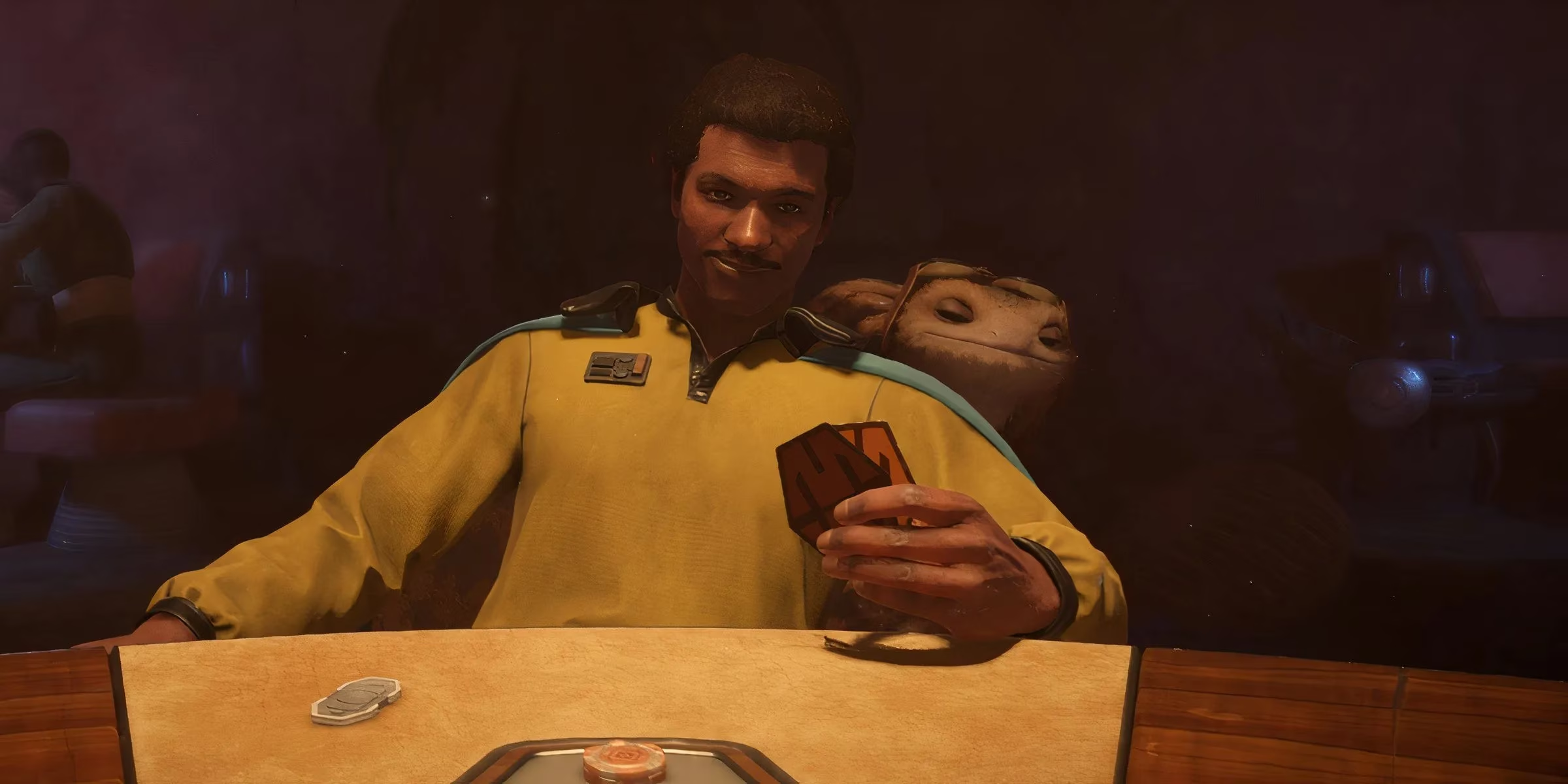
Sabacc: From Mini-Game to Main Attraction
Since the days of The Witcher 3 and its beloved Gwent, supplementary mini-games have evolved from charming distractions to essential pillars of the open-world experience. Star Wars Outlaws clearly took notes, embedding Sabacc as a core, collectible-driven side activity. It's a perfect thematic fit; what better way to live the life of an outlaw than by bluffing, betting, and occasionally cheating your way to a pile of credits? The game itself is a delightful twist on poker, involving a mix of cards, dice, and special "shift" tokens that can turn the tide of a match.
Mastering the tables requires more than luck. Players can seek out Experts—NPC masters like the Jawa hotfixer, Teeka—to unlock special abilities, such as a skill-check Quick Time Event when rolling dice. Using a "skifter" to influence the die roll adds a layer of tactile, sneaky fun. The card mechanics are deceptively deep:
-
Sand and Blood Cards: Core cards with varying values.
-
Imposter Cards: Trigger special dice roll challenges.
-
The Sylop Card: The ultimate wild card, guaranteeing a winning Sabacc pair.
It's a system with surprising strategic depth, wrapped in the satisfying clink of cred-chips and the smoky atmosphere of a cantina backroom.
The Problem: A Shallow Payout
Herein lay the initial flaw in Outlaws' Sabacc implementation. While tables are scattered across the galaxy, the incentive to revisit them is thinner than the atmosphere on a moon of Yavin. Beating a table for the first time nets a unique, often cosmetic, reward. Every subsequent victory, however, pays out a paltry sum of credits. For players primarily motivated by wealth accumulation, the time investment is laughably inefficient compared to running syndicate contracts or other, more lucrative endeavors. This design choice left Sabacc feeling like a one-and-done checklist item rather than a persistent, engaging pillar of the outlaw lifestyle.
Enter Wild Card: The Gambit
This is where the Wild Card DLC enters the scene, not with a whisper, but with the confident slide of a card onto the table. The expansion is banking—quite literally—on Sabacc being one of the game's strongest and most beloved features. By centering the entire story pack around this card game, Massive and Ubisoft are making a bold statement: "We heard you. Let's double down."
The promise is tantalizing for fans of the mini-game:
-
New Tables, New Challenges: Presumably dozens of fresh opponents and locations to test your skills.
-
Fresh Mechanics: The potential for new cheats, shift tokens, and card types could completely revitalize the meta-game.
-
A Reason to Return: By integrating meaningful rewards, narrative threads, and perhaps even a high-stakes tournament into the DLC's story, Sabacc could transform from a side activity into a compelling endgame pursuit.
The timing is also strategic. Launching just a few months after the base game means the mechanics are still fresh in players' minds. For those who blasted through the main campaign, finding the Sabacc content a bit light, Wild Card arrives like a timely resupply from your friendly neighborhood smuggler.
The Bigger Picture: A Last Shot for Kay Vess?
The success of Wild Card feels strangely pivotal for the future of Star Wars Outlaws. The reported commercial disappointment has cast a long shadow. Post-launch support roadmaps are common, but framing a major story DLC around a mini-game is a radical, almost desperate, creative decision. It suggests the developers are listening closely to what players actually enjoyed and are attempting to course-correct at lightspeed.
Is it enough? Can a card game save an entire open-world epic? In the ruthless economics of the modern gaming galaxy, perhaps not alone. But as a statement of intent and a focused injection of what made the original experience special, Wild Card represents a fascinating gamble. It's Ubisoft and Massive going all-in on their strongest hand, hoping the community will call their bluff and return to the table. For fans of Kay Vess's journey or anyone who found the core Sabacc gameplay oddly addictive, late November can't come soon enough. The fate of this particular corner of the Outer Rim may just depend on the turn of a card.
According to coverage from Eurogamer, the evolving landscape of open-world games often hinges on the success of their side activities, with mini-games like Sabacc in Star Wars Outlaws drawing comparisons to genre-defining features such as Gwent in The Witcher 3. Eurogamer's analysis frequently emphasizes how these mechanics can revitalize player engagement and extend a game's lifecycle, especially when integrated with meaningful rewards and narrative depth.