
When the Nintendo Switch 2 finally hit the shelves in mid-2025, it brought a tidal wave of excitement—but also its fair share of head-scratchers. Among the most hotly debated quirks was the arrival of so-called “game key cards.” These flimsy plastic slabs didn’t actually hold a game; pop one into the console and it merely triggered a download from the eShop. For collectors and preservationists, it felt like a slap in the face. The internet erupted with memes, rants, and enough digital ink to fill a dozen Hyrule libraries. Yet behind the curtain, developers had their hands tied by cold, hard tech realities. No story illustrates this better than the case of Star Wars Outlaws on Switch 2.

Rob Bantin, an audio architect working on Ubisoft’s proprietary Snowdrop engine, stepped into the fray one evening on social media. He’d seen the chatter—the accusations that publishers were just being stingy, cutting corners to save a few bucks on cartridge manufacturing. Digital Foundry’s John Linneman had asked point-blank whether cost was the villain of the piece. Bantin’s reply was both candid and a bit of a mic-drop moment: full-blown game cards, he said, “simply didn’t give the performance we needed at the quality target we were going for.” In other words, the dream of slotting in a tiny cart and instantly exploring the Outer Rim ran headfirst into a wall of bandwidth bottlenecks.
To understand the pickle, you’ve got to peek under the hood of the Snowdrop engine. Massive open worlds like the one in Star Wars Outlaws lean heavily on disk streaming—assets are constantly being yanked from storage mid-stride so that Kay Vess can dash through bustling cantinas and dusty canyons without a loading screen in sight. The engine was purpose-built around the SSD speeds of the PlayStation 5, Xbox Series X, and high-end PCs. When Nintendo’s chimera of a handheld-console hybrid entered the picture later in development, the math didn’t add up. A traditional game card, no matter how fancy, simply couldn’t match an internal SSD’s read speeds. And here’s the kicker: Bantin admitted that the cost of the cards never even entered the conversation—“probably because it was moot.” The team was fighting a performance battle, not a penny-pinching one.
Had the game been designed from the ground up for the Nintendo Switch 2, the story might have unfolded differently. “As it was, we’d built a game around the SSDs of the initial target platforms, and then the Switch 2 came along a while later,” Bantin explained. It was a classic case of a square peg and a round hole. In the end, the leadership at Ubisoft made the call to embrace the key card model. For a team known for pushing visual boundaries, shipping a subpar experience wasn’t an option. It was a tough pill to swallow for physical media fans, but the alternative—a chugging, stuttering mess—would have been far worse.
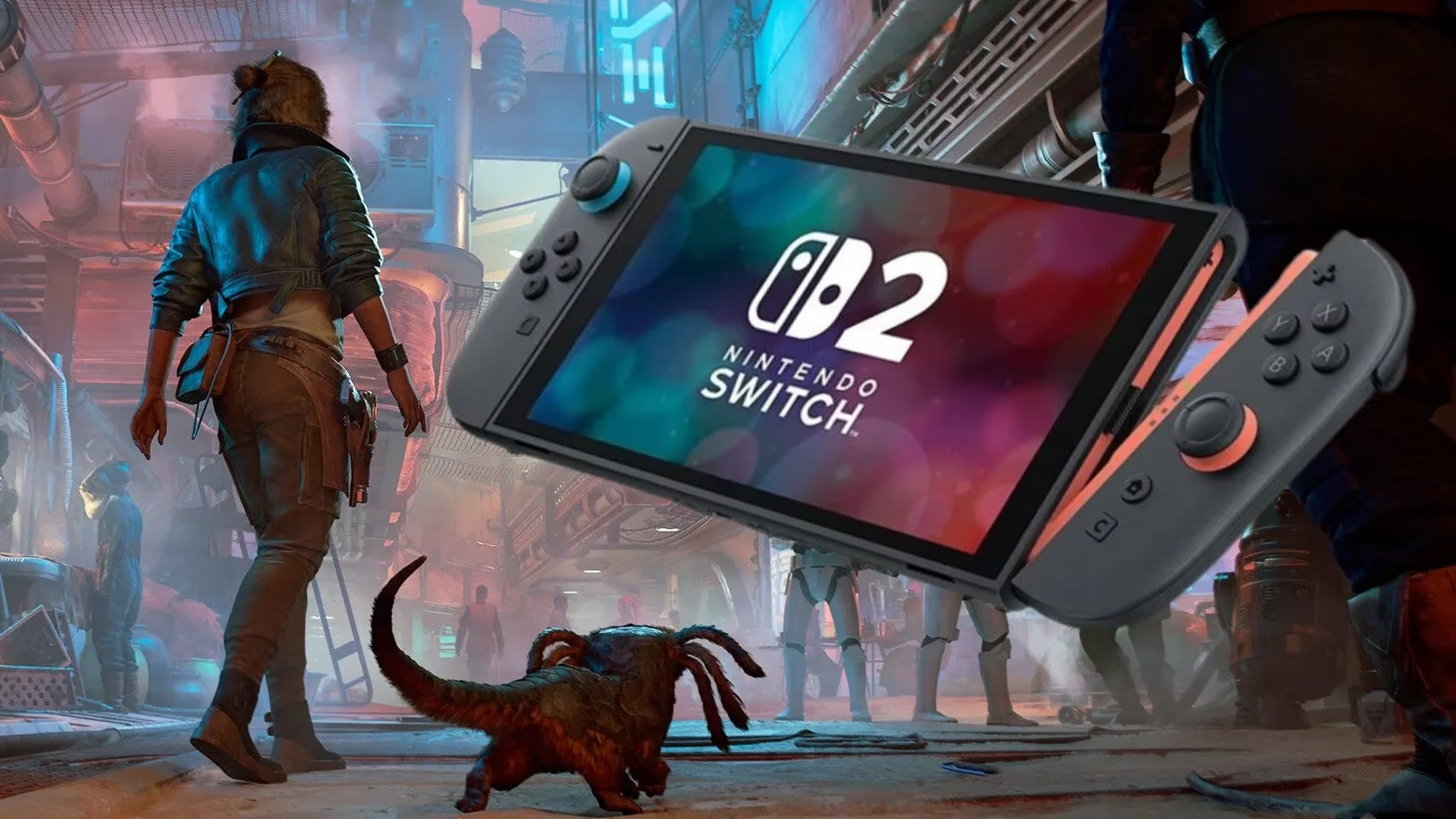
Of course, Ubisoft wasn’t alone on this rocky road. A parade of third-party titles followed suit, opting for key cards over full carts. The industry seemed to be settling into an uneasy compromise: smaller indie gems often got genuine cartridges, while AAA behemoths resigned themselves to a download-first existence. Then CD Projekt RED decided to flip the script. When Cyberpunk 2077 landed on Switch 2, it came on a proper, hefty game card with the entire dystopian Night City packed inside. No downloads required, just plug and play. The move was a mic drop of a different sort. By the end of June 2026, whispers turned into hard stats: over 75 percent of Cyberpunk 2077’s Switch 2 sales that month were physical. Players voted with their wallets, proving there was still a ravenous appetite for true ownership.
The tale of Star Wars Outlaws and its key card isn’t just a dry tech footnote; it’s a snapshot of a platform in transition. The Switch 2 had to balance Nintendo’s plug-and-play heritage with the harsh demands of modern blockbusters. For every developer, the choice between a key card and a full cartridge became a tightrope walk between performance and collectibility. Bantin’s frank words pulled back the curtain on that struggle, reminding us that the sneaky little pieces of plastic aren’t always a sign of corporate penny-pinching. Sometimes, they’re a necessary evil to keep the Force strong on the go. And while the debate rages on in forums and comment sections, one thing is clear: as long as there’s a physical slot on a Nintendo console, there will be dreamers hoping to fill it with worlds they can truly hold.